
 Emily Carter
If your dentist has recommended a deep cleaning, one of your first questions is probably: how much is this going to cost? Especially without insurance, the price can feel like a mystery.
The short answer: a deep cleaning costs $150 to $400 per quadrant without insurance, or $600 to $1,600 for a full mouth. But the total depends on how severe your gum disease is, where you live, and the dental office you choose.
This guide breaks down exactly what deep cleaning costs, what affects the price, how it compares to a regular cleaning, and how to make it affordable even without dental insurance.
A note about pricing
The costs listed in this article are national averages based on data from dental industry sources, insurance providers, and cost comparison databases. They do not represent pricing at MySmile Dental Care. Actual costs vary by location, provider, and the complexity of your case. Contact us for a personalized estimate.
Deep Cleaning Cost Breakdown
Dentists divide your mouth into four quadrants: upper left, upper right, lower left, and lower right. Deep cleaning is priced per quadrant because each section is treated individually, often across multiple appointments.
| Treatment | Cost Without Insurance | Cost With Insurance |
|---|---|---|
| Deep cleaning (1 quadrant) | $150 to $400 | $0 to $200 |
| Deep cleaning (full mouth, 4 quadrants) | $600 to $1,600 | $0 to $800 |
| Full mouth debridement | $100 to $250 | $0 to $75 |
| Periodontal maintenance (follow-up) | $100 to $300 | $20 to $100 |
| Regular cleaning (prophylaxis) | $75 to $200 | $0 (usually covered 100%) |
Some dental offices charge per tooth rather than per quadrant, typically $30 to $75 per tooth. If only a few teeth need treatment, per-tooth pricing may save you money. Ask your dentist which pricing structure they use when you call for an estimate.
What Is a Deep Cleaning (Scaling and Root Planing)?
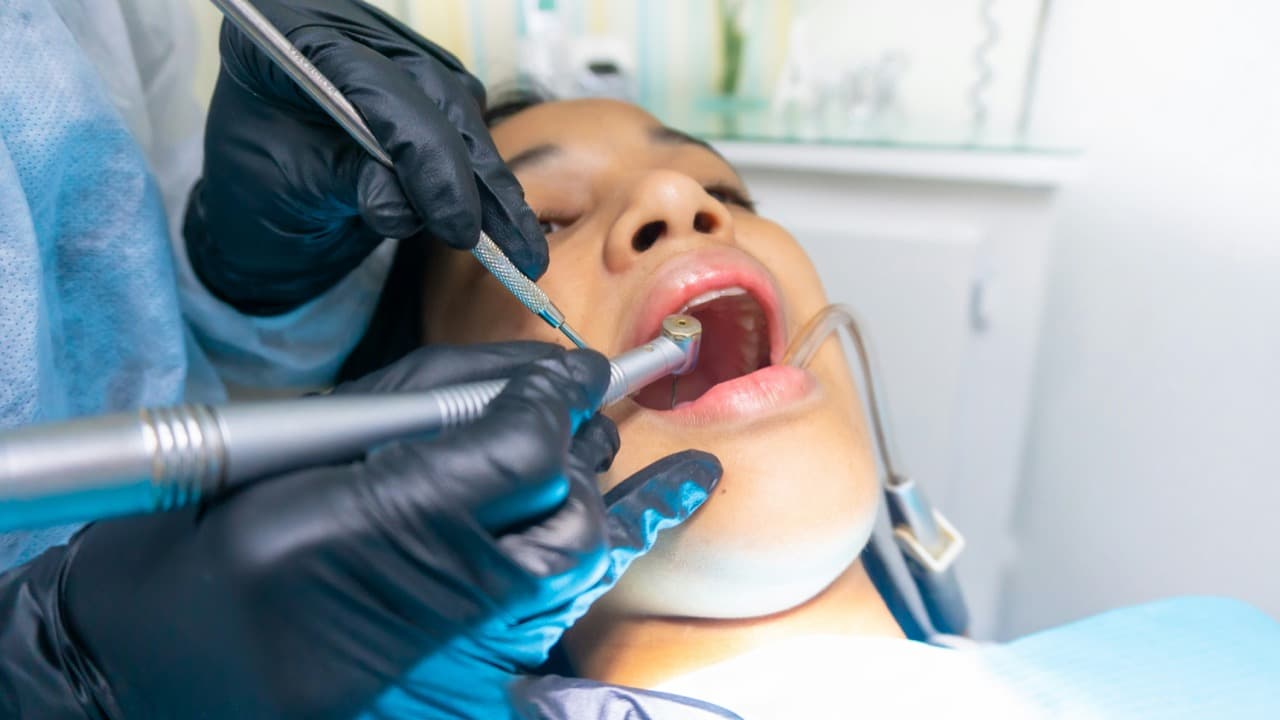
A deep cleaning, clinically called scaling and root planing, is a non-surgical treatment for gum disease (periodontal disease). It goes below the gumline to remove bacteria, plaque, and tartar that regular brushing and flossing cannot reach.
The procedure has two parts:
- Scaling removes plaque and hardened tartar (calculus) from the tooth surface and from the pockets that have formed between your gums and teeth.
- Root planing smooths the rough areas on tooth roots. Smooth roots help your gums reattach to your teeth and make it harder for bacteria to accumulate in the future.
Your dentist will use local anesthesia to numb the area, so the procedure is not painful. Most deep cleanings are completed in 2 to 4 visits, with each session focusing on one or two quadrants. Each appointment typically lasts 45 to 90 minutes.
Signs You May Need a Deep Cleaning
- Gums that bleed when you brush or floss
- Red, swollen, or tender gums
- Gums pulling away from your teeth (recession)
- Persistent bad breath that doesn't go away with brushing
- Loose teeth or changes in your bite
- Gum pockets measuring 4mm or deeper (your dentist measures this)
If you're experiencing any of these symptoms, schedule an appointment for a comprehensive evaluation. Early treatment prevents more expensive procedures down the road.
Deep Cleaning vs. Regular Cleaning: What's the Difference?
Many patients wonder why they need a deep cleaning when they already get regular cleanings. These are two very different procedures:
| Feature | Regular Cleaning (Prophylaxis) | Deep Cleaning (Scaling & Root Planing) |
|---|---|---|
| Purpose | Preventive maintenance | Treatment for gum disease |
| Where it cleans | Above the gumline | Above and below the gumline |
| Anesthesia | Not needed | Local anesthesia used |
| Sessions | 1 visit (30 to 60 min) | 2 to 4 visits (45 to 90 min each) |
| Frequency | Every 6 months | As needed for gum disease |
| Cost without insurance | $75 to $200 | $600 to $1,600 (full mouth) |
| Insurance coverage | Usually 100% | 50% to 80% |
A regular cleaning is like routine car maintenance. A deep cleaning is the repair work needed when a problem has developed. Your dentist determines which one you need based on your gum pocket measurements, X-rays, and overall gum health.
What Affects the Cost of a Deep Cleaning?
Several factors can push the price higher or lower than the average range:
1. Severity of Your Gum Disease
The more advanced your gum disease, the more time and care the procedure requires. Deeper gum pockets (5mm or more) mean more scaling and root planing work, which increases the cost. Mild cases with shallow pockets may be treated more quickly and at a lower price.
2. Geographic Location
Dental costs vary significantly by region. A deep cleaning in a major city like Los Angeles or New York typically costs more than the same procedure in a smaller town. The cost of living, office rent, and local competition all influence pricing.
3. General Dentist vs. Periodontist
A general dentist can perform most deep cleanings. However, severe cases may be referred to a periodontist (a gum disease specialist). Periodontists typically charge 20% to 50% more than general dentists due to their specialized training. For most patients, a general dentist provides excellent results at a lower cost.
4. Additional Treatments
Your dentist may recommend additional treatments alongside deep cleaning, each with its own cost:
- Antibiotic treatment (Arestin placed in gum pockets): $30 to $75 per tooth
- Dental X-rays: $25 to $250 depending on type
- Laser gum therapy: $100 to $400 per quadrant (offered by some offices as an alternative to traditional scaling)
Does Insurance Cover Deep Cleaning?
Most dental insurance plans do cover deep cleaning because it is considered a medically necessary treatment, not a cosmetic procedure. Here's how coverage typically works:
- PPO plans usually cover 50% to 80% of scaling and root planing after your deductible
- HMO plans may cover the procedure with a fixed copayment at in-network providers
- Discount plans are not insurance but can reduce costs by 20% to 50% at participating dentists
Some plans require prior authorization for deep cleaning, meaning your dentist must submit documentation (X-rays, gum pocket measurements) before the insurance company approves coverage. Ask your dental office to handle this before your appointment to avoid surprises.
Not sure what your plan covers? Check our accepted insurance page or call our office and we can help verify your benefits.


How to Pay for Deep Cleaning Without Insurance
If you don't have dental insurance, several options can make deep cleaning more affordable:
In-House Payment Plans
Many dental offices, including MySmile Dental Care, offer payment plans that let you spread the cost over several months. Since deep cleaning is already done in multiple visits, you can often pay per session rather than for the entire treatment upfront.
CareCredit and Healthcare Financing
CareCredit is a healthcare credit card accepted at most dental offices. It offers promotional financing with 0% interest for 6 to 18 months if you pay the balance in full by the end of the promotional period. Other options include Cherry, Sunbit, and LendingClub. Visit our financing options page to compare plans.
Dental Schools
Dental schools offer deep cleaning at significantly reduced rates, often 50% to 70% less than private practices. The work is performed by dental students under the direct supervision of licensed faculty dentists. Appointments take longer, but the quality of care is comparable to a private office. Check if there is an accredited dental school near you.
Community Health Centers
Federally Qualified Health Centers (FQHCs) provide dental services on a sliding fee scale based on your income. If you are uninsured or underinsured, you may qualify for substantially reduced rates. Visit the Health Resources & Services Administration (HRSA) website to find a community health center near you.
Dental Discount Plans
Dental discount plans (also called dental savings plans) are not insurance, but they provide 20% to 50% off procedures at participating dentists for an annual membership fee of $80 to $200. If you need multiple dental procedures, a discount plan can pay for itself quickly.
New Patient Specials
Many dental offices offer discounts for new patients. At MySmile Dental Care, we offer a new patient special that can help reduce your initial costs. Ask about current promotions when you call to schedule.
What Happens If You Skip a Deep Cleaning?
It can be tempting to put off treatment when the cost feels high, but untreated gum disease gets worse over time, not better. Here is what can happen if you skip a recommended deep cleaning:
- Gum pockets deepen, trapping more bacteria and making the problem harder (and more expensive) to treat
- Bone loss around the teeth, which is irreversible
- Tooth loosening and loss, potentially requiring dental implants ($3,000 to $5,000 per tooth) or dentures
- Gum surgery ($500 to $3,000), which may become necessary for advanced periodontal disease
- Systemic health risks, as gum disease is linked to heart disease, diabetes complications, and respiratory infections
A $600 to $1,600 deep cleaning is a fraction of what you would pay for implants, surgery, or dentures. Treating gum disease early saves both your teeth and your wallet.
What to Expect After a Deep Cleaning
After your deep cleaning appointment, it is normal to experience:
- Mild soreness or tenderness in your gums for 2 to 3 days
- Tooth sensitivity to hot and cold foods for up to a week
- Minor bleeding when brushing for the first day or two
Your dentist will provide aftercare instructions, which typically include:
- Taking over-the-counter pain relievers (ibuprofen or acetaminophen) as needed
- Rinsing with warm saltwater 2 to 3 times per day
- Eating soft foods for the first 24 to 48 hours
- Avoiding very hot or very cold foods and drinks
- Continuing to brush and floss gently
Most patients feel back to normal within a few days. Your dentist will schedule a follow-up visit 4 to 6 weeks later to check that your gums are healing properly.
Periodontal Maintenance After Deep Cleaning
After a deep cleaning, your dentist will recommend periodontal maintenance cleanings every 3 to 4 months instead of the standard twice-a-year schedule. These maintenance visits cost $100 to $300 without insurance and include:
- Re-measuring gum pocket depths to track improvement
- Removing any new plaque or tartar buildup above and below the gumline
- Polishing your teeth
- Evaluating your home care routine
Keeping up with maintenance cleanings is essential. Without them, gum disease is likely to return, and you may need another deep cleaning. Think of maintenance visits as an investment that protects the results of your initial treatment.
Tips to Save Money on Deep Cleaning
Here are practical ways to reduce your out-of-pocket cost for deep cleaning:
- Get multiple estimates. Call 3 to 5 dental offices in your area and ask for the per-quadrant price for scaling and root planing. Prices can vary by hundreds of dollars.
- Ask about payment plans. Many offices offer interest-free installment plans for uninsured patients.
- Check for new patient specials. If you are not established with a dentist, new patient offers can reduce your initial visit costs.
- Consider a dental school. You can save 50% to 70% while receiving supervised care from dental students.
- Ask if all four quadrants need treatment. Some patients only need 1 or 2 quadrants treated, which significantly lowers the total cost.
- Prevent future deep cleanings. Brush twice daily, floss every day, and keep up with regular dental visits to avoid needing the procedure again.
Get a Deep Cleaning Estimate at MySmile Dental Care
At MySmile Dental Care in Anaheim Hills, Dr. Mehru Bhatia, DDS and our team provide thorough, gentle deep cleanings with transparent pricing. We accept most dental insurance plans and offer multiple financing options for patients paying out of pocket.
If you have been told you need a deep cleaning or are experiencing symptoms of gum disease, do not wait. Schedule an appointment online or call us at (714) 998-4151 to get a personalized estimate and discuss payment options.
Frequently Asked Questions
How much does a deep cleaning cost without insurance?
A deep cleaning (scaling and root planing) typically costs $150 to $400 per quadrant without insurance. Since your mouth has four quadrants, a full-mouth deep cleaning ranges from $600 to $1,600. The exact price depends on the severity of gum disease, your location, and the dental office you visit.
How much does a deep cleaning cost with insurance?
With dental insurance, a deep cleaning usually costs $0 to $200 out of pocket per quadrant. Most PPO plans cover 50% to 80% of scaling and root planing after your deductible is met. Some plans classify it as a basic procedure (80% coverage) while others treat it as a major procedure (50% coverage). Check with your insurance provider for your specific plan details.
Is a deep cleaning the same as a regular cleaning?
No, a deep cleaning is different from a regular cleaning. A regular cleaning (prophylaxis) removes plaque and tartar above the gumline and costs $75 to $200. A deep cleaning goes below the gumline to remove bacteria and tartar from tooth roots and gum pockets. Deep cleanings are a medical treatment for gum disease, while regular cleanings are preventive maintenance.
How many sessions does a deep cleaning take?
A deep cleaning is typically completed in 2 to 4 sessions, with each session treating one or two quadrants of your mouth. Each appointment lasts about 45 to 90 minutes. Splitting the treatment into multiple visits allows your dentist to be thorough and lets each area heal before the next session.
Is deep cleaning painful?
Deep cleaning is not painful during the procedure because your dentist will apply local anesthesia to numb the treatment area. You may feel some pressure as the instruments work below the gumline. After the procedure, mild soreness and sensitivity are common for a few days. Over-the-counter pain relievers and saltwater rinses usually manage any discomfort.
Does dental insurance cover deep cleaning?
Most dental insurance plans cover deep cleaning (scaling and root planing) because it is a medically necessary treatment for gum disease. Coverage typically ranges from 50% to 80% depending on your plan. However, some plans may require prior authorization or have waiting periods for new members. Contact your insurance provider to verify your coverage before scheduling.
How can I afford a deep cleaning without insurance?
Several options can make deep cleaning affordable without insurance: dental discount plans that reduce costs by 20% to 50%, in-house payment plans offered by many dental offices, healthcare credit cards like CareCredit with 0% interest promotional periods, dental schools that offer discounted treatments, and community health centers with sliding-scale fees based on income.
What happens if I don't get a deep cleaning?
Skipping a recommended deep cleaning allows gum disease to progress. Untreated gum disease can lead to deeper gum pockets, bone loss around teeth, tooth loosening and eventual tooth loss, chronic bad breath, and increased risk of systemic health issues including heart disease and diabetes complications. Early treatment is always less expensive than treating advanced gum disease.
How much does scaling and root planing cost?
Scaling and root planing is the clinical name for a deep cleaning. It costs $150 to $400 per quadrant without insurance. Some dental offices charge per tooth instead, typically $30 to $75 per tooth. A full-mouth treatment covering all four quadrants ranges from $600 to $1,600 depending on the complexity of your case.
How often do you need a deep cleaning?
Most patients only need one deep cleaning treatment. After the initial scaling and root planing, your dentist will schedule periodontal maintenance cleanings every 3 to 4 months to keep gum disease under control. If gum disease returns or worsens, additional deep cleaning may be recommended. Good home care with brushing and flossing helps prevent the need for repeat treatments.
Is a deep cleaning worth the cost?
Yes, a deep cleaning is worth the cost because it treats gum disease before it causes irreversible damage. Untreated gum disease can lead to bone loss, tooth loss, and the need for expensive procedures like dental implants ($3,000 to $5,000 per tooth) or gum surgery ($500 to $3,000). A deep cleaning at $600 to $1,600 is a fraction of these costs and can save your natural teeth.
What is the cost of a full mouth debridement?
A full mouth debridement costs $100 to $250 without insurance. This is a separate procedure from a deep cleaning. A debridement removes heavy plaque and tartar buildup so your dentist can properly examine your teeth and gums. If gum disease is found during the exam, a deep cleaning may be recommended as a follow-up treatment.
Disclaimer
This article is for informational purposes only and does not constitute dental or medical advice. It is not a substitute for professional dental care, diagnosis, or treatment. Always consult your dentist or other qualified health care provider with any questions you may have about a dental condition or treatment. Reading this content does not establish a patient-provider relationship with MySmile Dental Care.
Need a Deep Cleaning? Get a Personalized Estimate.
At MySmile Dental Care, we offer gentle deep cleanings with transparent pricing. We accept most insurance plans and offer flexible financing options so cost never stands between you and healthy gums.