
 Emily Carter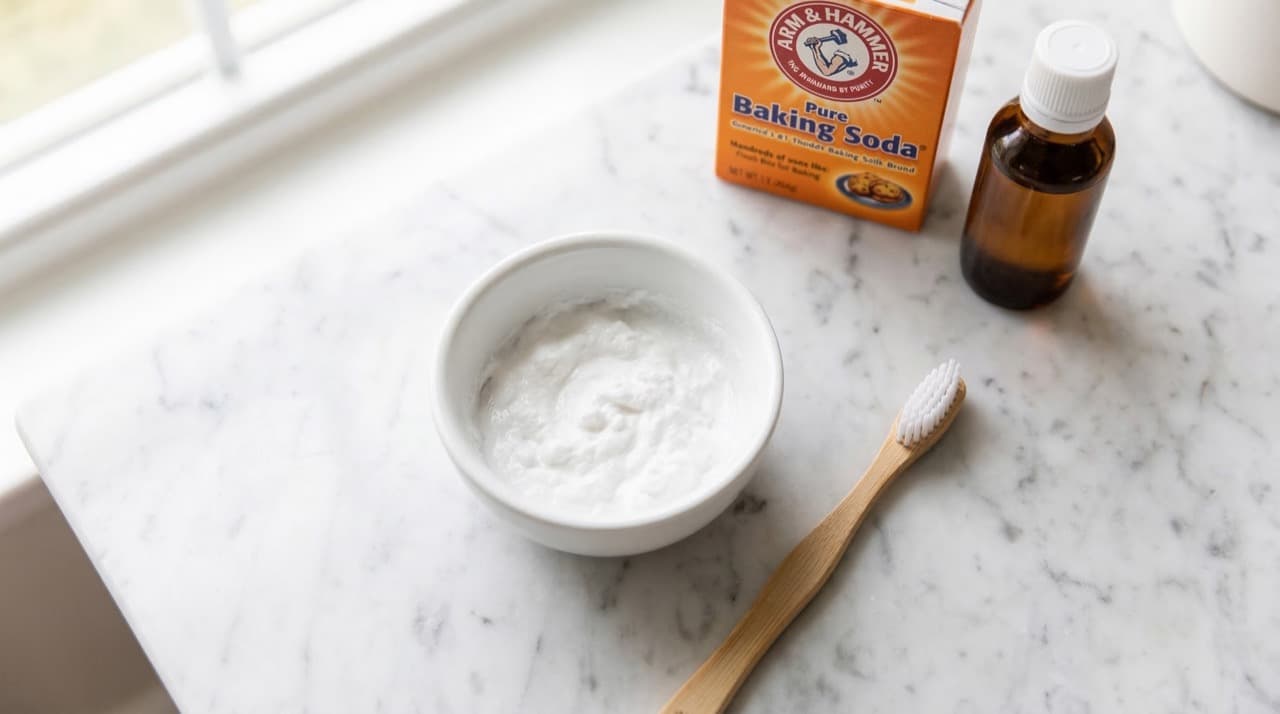
At a Glance
- Baking soda can remove mild surface stains from teeth through gentle abrasion, but it cannot change the natural color of your teeth.
- It has a low abrasivity score, making it safer than many commercial whitening toothpastes when used correctly.
- Limit use to two or three times per week and always follow up with fluoride toothpaste, since baking soda does not protect against cavities.
- Never mix baking soda with lemon juice or vinegar. The acid weakens enamel and the abrasive scrubbing accelerates the damage.
- For whitening beyond surface stains, professional treatments with hydrogen peroxide deliver faster and more noticeable results.
Baking soda is one of the most popular DIY teeth whitening remedies on the internet. It is cheap, available in every grocery store, and has been used as a cleaning agent for over a century. But does it actually whiten your teeth, and more importantly, is it safe?
Here is what the research says about brushing your teeth with baking soda, what it can and cannot do, and when professional whitening is the better choice.
Can Baking Soda Actually Whiten Teeth?
Yes, but with a big caveat. Baking soda (sodium bicarbonate) can remove surface stains from your teeth through mild abrasion. When you brush with it, the fine granules physically scrub away stain molecules that have accumulated on the outer layer of your enamel from coffee, tea, red wine, and tobacco.
A 2017 review published in the Journal of the American Dental Association found that toothpastes containing baking soda were significantly more effective at removing stains than toothpastes without it. Multiple studies have confirmed that baking soda formulations outperform non-baking soda products for surface stain removal.
However, baking soda cannot change the natural color of your teeth. If your teeth are yellow because of thin enamel, genetics, or aging (which exposes the darker dentin layer underneath), baking soda will not help. It only works on extrinsic stains that sit on the surface, not intrinsic discoloration that lives within the tooth structure.
How Baking Soda Whitens Teeth
Baking soda whitens through two mechanisms:
- Mild abrasion. The fine particles physically scrub stain deposits off the enamel surface. Think of it like a gentle scouring powder for your teeth.
- Alkaline pH. Baking soda has a pH of about 8.3, making it mildly alkaline. This helps break down acidic stain compounds and creates an environment less favorable for stain-causing bacteria.
What makes baking soda interesting compared to other abrasives is its relatively low score on the Relative Dentin Abrasivity (RDA) scale. The RDA measures how much a substance wears down tooth structure. Pure baking soda scores around 7, while most commercial whitening toothpastes score between 100 and 200 (the FDA considers anything below 250 safe for daily use). So despite its gritty texture, baking soda is actually gentler on your teeth than many products marketed specifically for whitening.
How to Use Baking Soda on Your Teeth Safely
If you want to try baking soda for mild stain removal, here is the safest approach:
The Basic Paste Method
- Mix about half a teaspoon of baking soda with a few drops of water to form a thin paste
- Apply the paste to a soft-bristled toothbrush
- Brush gently in small circular motions for about two minutes, covering all surfaces
- Rinse thoroughly with water
- Follow up by brushing with your regular fluoride toothpaste to protect against cavities
Important Guidelines
- Limit frequency to two or three times per week. Daily use is unnecessary and increases the risk of enamel wear and gum irritation over time.
- Use light pressure. Let the baking soda do the work. Pressing hard does not improve results and can damage your gums and enamel.
- Always follow with fluoride toothpaste. Baking soda has zero fluoride, so it does not protect against cavities. Your regular toothpaste handles that job.
- Stop if you notice sensitivity or gum irritation. Some people find that even occasional use causes discomfort, especially if they already have thin enamel or receding gums.
DIY Recipes to Avoid
The internet is full of baking soda whitening recipes that combine it with acidic ingredients. These are the ones dentists warn against most:
- Baking soda + lemon juice. Lemon juice is highly acidic (pH around 2) and softens your enamel. Scrubbing softened enamel with an abrasive is a recipe for permanent damage.
- Baking soda + apple cider vinegar. Same problem. The acetic acid in vinegar erodes enamel, and adding abrasion makes it worse.
- Baking soda + strawberries. While this combination looks appealing, strawberries contain citric and malic acid. A 2015 study found that the strawberry-baking soda mixture did not meaningfully whiten teeth and actually reduced enamel hardness.
- Baking soda + hydrogen peroxide (high concentration). While diluted hydrogen peroxide can be safe for oral use, mixing store-bought peroxide with baking soda at home creates an unpredictable concentration. Professional whitening products are formulated with precise peroxide levels for safety.
Baking Soda vs. Whitening Toothpaste
If you are choosing between plain baking soda and a whitening toothpaste, the toothpaste is usually the better option for most people. Here is why:
- Whitening toothpastes contain fluoride. This protects against cavities while you whiten, something plain baking soda cannot do.
- Many whitening toothpastes already contain baking soda. You get the stain-removal benefit in a formulation that has been tested for safety and abrasivity.
- Some whitening toothpastes include low-concentration peroxide. This adds a mild chemical whitening effect on top of the mechanical stain removal, giving you slightly better results than abrasion alone.
- Consistency is easier. A toothpaste that you use twice daily will deliver more consistent results than a baking soda paste you mix up a few times a week.
If you prefer the DIY route, look for a toothpaste that lists sodium bicarbonate (baking soda) as an active ingredient. You get the same cleaning power in a more convenient, enamel-safe format.
Baking Soda vs. Professional Whitening
For anything beyond light surface staining, professional whitening delivers results that baking soda simply cannot match. Here is the fundamental difference:
- Baking soda works by physically scrubbing stains off the surface of your enamel. It cannot penetrate the tooth or change its underlying color.
- Professional whitening uses hydrogen peroxide or carbamide peroxide at controlled concentrations. These chemicals penetrate the enamel and break down stain molecules within the tooth structure itself. This is why professional treatments can lighten teeth by several shades in a single session.
In-office whitening at a dental practice also includes gum protection, custom-fitted trays, and dentist supervision to ensure the treatment is both effective and safe. Professional teeth whitening is the clear choice when you want visible, lasting results.

Who Should Avoid Baking Soda
Baking soda is not right for everyone. You should skip it if you have:
- Braces or permanent retainers. The abrasive can damage the adhesive bonding brackets to your teeth and leave white spots when the braces come off.
- Dental restorations. Crowns, veneers, and composite bonding can be dulled or scratched by abrasive pastes. These restorations do not respond to whitening the same way natural teeth do.
- Thin or weakened enamel. If your dentist has told you that your enamel is worn, adding any abrasive to your routine could accelerate the problem.
- Sensitive teeth or receding gums. The abrasion and the salty taste of baking soda can aggravate existing sensitivity and irritate exposed root surfaces.
If you are unsure whether baking soda is safe for your teeth, ask your dentist at your next checkup. They can evaluate your enamel thickness and recommend the best whitening approach for your situation.
The Bottom Line
Baking soda is a legitimate, low-cost option for removing mild surface stains from your teeth. The research supports its effectiveness as a gentle abrasive, and it is safer than many people assume when used correctly and in moderation. But it has clear limits: it cannot bleach your teeth whiter than their natural shade, it offers no cavity protection, and it is no substitute for professional whitening when you want dramatic results.
For the best of both worlds, use a baking soda toothpaste that includes fluoride for your daily routine, and talk to your dentist about professional options if you want to go further. At MySmile Dental Care in Anaheim Hills, Dr. Bhatia can assess your staining, discuss your whitening goals, and recommend a treatment plan that actually delivers the results you are looking for.
Frequently Asked Questions
How long does it take for baking soda to whiten teeth?
Most people notice a subtle difference after two to three weeks of regular use (two to three times per week). However, results depend on the type of staining. Surface stains from coffee or tea respond faster than deep, intrinsic discoloration, which baking soda cannot address at all.
Can baking soda damage tooth enamel?
Baking soda is a mild abrasive with a low score on the Relative Dentin Abrasivity (RDA) scale, so it is gentler than many commercial toothpastes. That said, using it too frequently, brushing too hard, or mixing it with acidic ingredients like lemon juice can wear down enamel over time. Stick to two or three times per week with light pressure.
Is brushing with baking soda every day safe?
Daily use is not recommended. While baking soda itself is low in abrasivity, using it every day without fluoride leaves your teeth without the cavity-fighting protection that fluoride toothpaste provides. It can also irritate your gums with prolonged daily use. Two to three times per week is a safer frequency.
Does baking soda toothpaste work as well as plain baking soda?
Baking soda toothpaste is generally a better option because it combines the mild abrasive action of baking soda with fluoride and other protective ingredients. Studies show that toothpastes containing baking soda are effective at removing surface stains while also protecting against cavities. They are also easier to use consistently.
Can baking soda remove yellow teeth?
Baking soda can reduce yellowing caused by surface stains from food, drinks, or tobacco. However, if your teeth are naturally yellow because of thinner enamel or darker dentin underneath, baking soda will not change that. Intrinsic yellowing requires professional whitening with hydrogen peroxide or carbamide peroxide to penetrate below the surface.
Is baking soda better than whitening strips?
Whitening strips are more effective than baking soda for noticeable whitening because they contain hydrogen peroxide, which bleaches stains below the enamel surface. Baking soda only removes surface stains through physical scrubbing. For mild surface stains, baking soda may be sufficient. For more significant whitening, strips or professional treatment will deliver better results.
Can I mix baking soda with lemon juice or apple cider vinegar?
No. Mixing baking soda with acidic ingredients like lemon juice, apple cider vinegar, or strawberries is a popular DIY recipe, but dentists strongly advise against it. The acid weakens your enamel, and then scrubbing with an abrasive accelerates the damage. This combination can cause permanent enamel erosion and increased sensitivity.
Disclaimer
This article is for informational purposes only and does not constitute dental or medical advice. It is not a substitute for professional dental care, diagnosis, or treatment. Always consult your dentist or other qualified health care provider with any questions you may have about a dental condition or treatment. Reading this content does not establish a patient-provider relationship with MySmile Dental Care.
Want Results Beyond Surface Stains?
Baking soda can only do so much. Professional whitening at MySmile Dental Care uses safe, dentist-supervised hydrogen peroxide treatments that lighten teeth several shades in a single visit. Dr. Bhatia can recommend the best option for your specific type of staining.