
 Emily Carter
If you are missing most or all of your teeth, or you are tired of dentures that slip, click, and limit what you can eat, All-on-4 dental implants offer a permanent alternative. Four titanium implants support a full arch of fixed teeth that look, feel, and function like natural teeth.
This article explains what All-on-4 implants are, how the procedure works step by step, who is a good candidate, what it costs, and how it compares to traditional implants and dentures.
What Are All-on-4 Dental Implants?
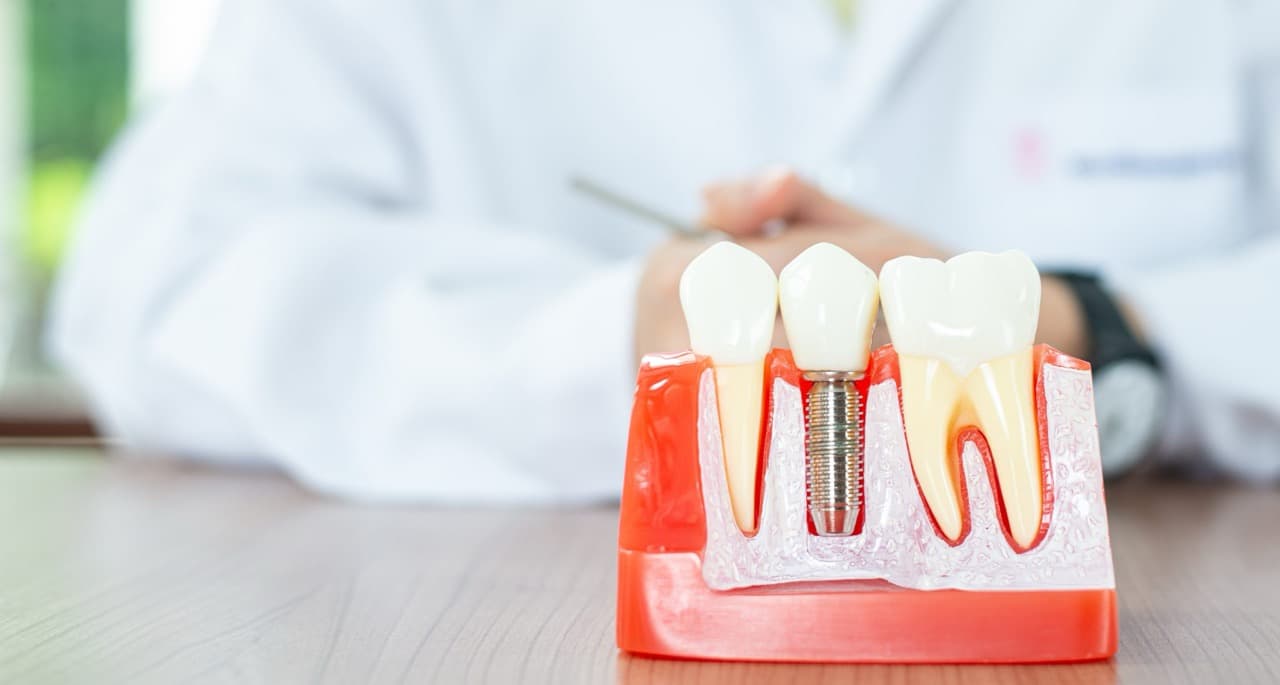
All-on-4 is a full-arch tooth replacement technique that uses exactly four titanium implants to anchor a complete set of prosthetic teeth to the jawbone. Instead of placing one implant for each missing tooth (which could mean 8 to 10 implants per arch), All-on-4 achieves the same result with just four.
The key is strategic placement. Two implants go in vertically at the front of the jaw, where bone is naturally thickest. The other two are placed at a 30 to 45 degree angle in the back of the jaw. This angled placement does two important things:
- Maximizes bone contact by engaging longer stretches of the denser front jawbone, even when the back of the jaw has experienced bone loss
- Eliminates the need for bone grafting in most patients, which saves months of healing time and thousands of dollars
The prosthetic teeth are fixed permanently to the implants. Unlike removable dentures, you do not take them out to clean or sleep. They stay in place 24/7 and are only removed by your dentist during maintenance appointments.
All-on-4 vs. Traditional Implants vs. Dentures
Choosing between these three options is one of the biggest decisions patients face. Here is how they compare:
| Feature | All-on-4 | Traditional implants | Dentures |
|---|---|---|---|
| Number of implants per arch | 4 | 6 to 10 | None |
| Bone grafting needed? | Rarely | Often | No |
| Fixed or removable? | Fixed | Fixed | Removable |
| Chewing force restored | 90%+ | 90%+ | 20 to 25% |
| Preserves jawbone? | Yes | Yes | No (bone loss continues) |
| Typical cost per arch | $15,000 to $30,000 | $40,000 to $60,000+ | $1,000 to $3,000 |
| Treatment time | 3 to 6 months | 6 to 12+ months | Weeks |
| Lifespan | Implants: 20+ years; arch: 10 to 15 years | Implants: 20+ years; crowns: 10 to 15 years | 5 to 8 years |
For patients who want the stability and bone preservation of implants but want to minimize surgery, cost, and healing time, All-on-4 is often the best option.
How the All-on-4 Procedure Works
The All-on-4 process involves several stages, from consultation to your permanent smile. Here is what to expect at each step.
Step 1: Consultation and 3D Imaging
Your treatment begins with a comprehensive evaluation. At MySmile Dental Care, Dr. Bhatia will:
- Examine your teeth, gums, and jawbone
- Take 3D scans (CBCT) and X-rays to map your bone density and identify the ideal implant positions
- Review your medical history to ensure you are a good candidate for implant surgery
- Discuss your goals, timeline, and budget
This step determines whether All-on-4 is the right approach or whether an alternative like All-on-6 or traditional implants would be better for your situation.
Step 2: Treatment Planning
Using your 3D scans, we create a surgical guide that maps the exact angle, depth, and position for each of the four implants. This computer-guided planning ensures precision during surgery and predictable results. We also design your temporary teeth in advance so you leave the office with a functional smile on surgery day.
Step 3: Implant Placement Surgery
On surgery day, the procedure typically takes 2 to 4 hours per arch under local anesthesia with optional sedation. Here is what happens:
- Any remaining damaged teeth are extracted
- Four titanium implants are placed into the jawbone at the planned positions
- A set of temporary prosthetic teeth is attached to the implants the same day
You walk out of the office with a full set of teeth. The temporary prosthetic is functional enough to eat soft foods and looks natural while your implants heal.
Step 4: Healing and Osseointegration
Over the next 3 to 6 months, the titanium implants fuse with your jawbone through a process called osseointegration. During this period:
- You eat a soft food diet to avoid putting excessive force on the healing implants
- You attend follow-up appointments so your dentist can monitor healing
- Most patients return to work and normal activities within 1 to 2 days after surgery
Step 5: Permanent Teeth
Once the implants have fully integrated with the bone, we replace the temporary prosthetic with your permanent teeth. These are custom designed to match the shape, size, and shade of natural teeth. The permanent arch is made from durable materials like zirconia or acrylic with a titanium frame, and it is secured to the implants with screws.
Who Is a Good Candidate for All-on-4?
All-on-4 implants are designed for patients who need a full arch of teeth replaced. You may be a good candidate if you:
- Are missing most or all of your teeth in one or both arches
- Have teeth that are failing due to severe decay, gum disease, or fractures and need to be extracted
- Wear dentures and want a fixed, permanent alternative
- Have been told you have bone loss and may not qualify for traditional implants without bone grafting
- Are in overall good health and able to undergo minor oral surgery
Who May Not Be a Good Candidate
All-on-4 may not be the best option for patients who:
- Have uncontrolled diabetes or autoimmune conditions that impair healing
- Are heavy smokers (smoking significantly increases implant failure rates)
- Have severe, untreated gum disease that needs to be resolved first
- Only need a few teeth replaced (individual implants, bridges, or partial dentures may be better options)
All-on-4 Cost and Financing
All-on-4 dental implants typically cost $15,000 to $30,000 per arch. The total depends on:
- Whether extractions or other preparatory work is needed
- The material of the permanent prosthetic (acrylic vs. zirconia)
- Geographic location and the dentist's experience
- Whether sedation is used during surgery
While the upfront cost is higher than dentures, All-on-4 is typically more cost-effective over 10 to 20 years when you factor in denture replacements, adhesive costs, relining, and the ongoing bone loss that dentures do not prevent.
At MySmile Dental Care, we offer several financing options to make All-on-4 accessible, including monthly payment plans. We also work with your dental insurance to maximize your benefits.
Recovery and Aftercare
Recovery from All-on-4 surgery is faster than most patients expect:
| Timeline | What to expect |
|---|---|
| Day 1 | Rest, ice packs, prescribed pain medication, liquids only |
| Days 2 to 3 | Peak swelling, start soft foods, manage discomfort with medication |
| Week 1 | Swelling subsides, most patients return to work |
| Weeks 2 to 4 | Gradually expanding soft food diet, follow-up appointments |
| Months 2 to 3 | Continued soft diet, implants integrating with bone |
| Months 3 to 6 | Permanent prosthetic placed, return to normal diet |
Long-Term Care
All-on-4 implants require consistent care to last as long as possible:
- Brush twice daily with a soft-bristled toothbrush
- Use a water flosser daily to clean under the prosthetic arch
- Use interdental brushes around the implant posts
- Visit your dentist every 6 months for professional cleanings and implant checks
- Avoid chewing ice, hard candy, and other extremely hard objects
- If you grind your teeth, wear a night guard to protect the prosthetic
Benefits of All-on-4 Dental Implants
Here is why patients choose All-on-4 over other tooth replacement options:
- Same-day teeth. You receive temporary teeth on the day of surgery. No gap period without teeth.
- No bone grafting needed in most cases, saving months of healing and additional cost.
- Preserves jawbone. The implants stimulate the bone, preventing the facial collapse that occurs with dentures over time.
- Eat what you want. After healing, you can eat steak, apples, corn on the cob, and other foods that are off-limits with dentures.
- No adhesive, no slipping. The teeth are fixed to implants, not sitting on your gums.
- Natural appearance. Custom-designed prosthetic teeth match your facial structure and desired tooth shade.
- Long lasting. With proper care, implants can last 20 years or more.
All-on-4 at MySmile Dental Care
At MySmile Dental Care in Anaheim Hills, Dr. Mehru Bhatia provides comprehensive dental implant services, including All-on-4 full-arch restorations. Our office uses 3D imaging and computer-guided surgical planning for precise implant placement and predictable results.
We offer free implant consultations so you can learn whether All-on-4 is right for your situation, get a personalized cost estimate, and explore financing options before committing to treatment.
Frequently Asked Questions
What are All-on-4 dental implants?
All-on-4 dental implants are a full-arch tooth replacement system that uses four strategically placed titanium implants to support an entire set of upper or lower teeth. Two implants are placed vertically at the front of the jaw and two are placed at an angle in the back, maximizing bone contact and often eliminating the need for bone grafting. The result is a fixed, permanent set of teeth that look and function like natural teeth.
How much do All-on-4 dental implants cost?
All-on-4 dental implants typically cost between $15,000 and $30,000 per arch, depending on the complexity of the case, the materials used for the prosthetic teeth, and the dentist's experience. This is generally less expensive than placing 6 to 8 individual implants, which can cost $40,000 to $60,000 or more per arch. Many dental offices offer financing plans to make the cost more manageable.
How long do All-on-4 implants last?
The titanium implants themselves can last 20 years or longer with proper care, and many patients keep them for life. The prosthetic teeth (the arch that attaches to the implants) typically last 10 to 15 years before needing replacement or refurbishment due to normal wear. Good oral hygiene, regular dental checkups, and avoiding habits like teeth grinding extend the lifespan of both components.
What is the recovery time for All-on-4 implants?
Most patients can return to normal activities within 1 to 2 days after surgery. Swelling and discomfort peak around days 2 to 3 and gradually improve over the first week. You will be on a soft food diet for 2 to 3 months while the implants integrate with the jawbone. The permanent prosthetic teeth are placed after 3 to 6 months, once the implants have fully fused with the bone.
Can you get All-on-4 implants with bone loss?
Yes, All-on-4 implants are specifically designed for patients with bone loss. The two back implants are placed at a 30 to 45 degree angle, which allows them to engage denser bone in the front of the jaw and avoid areas of bone loss in the back. This angled placement is one of the biggest advantages of All-on-4 over traditional implants, which often require bone grafting before placement.
What is the difference between All-on-4 and All-on-6 implants?
All-on-4 uses four implants per arch while All-on-6 uses six. The additional two implants in All-on-6 provide extra support and are sometimes recommended for patients with very poor bone density, larger jaws, or those who grind their teeth heavily. All-on-6 costs more due to the additional implants and may require more surgery time, but both systems achieve the same goal of a fixed, full-arch restoration.
Are All-on-4 implants better than dentures?
All-on-4 implants offer several advantages over traditional dentures. They are permanently fixed in place (no slipping or adhesive needed), they preserve jawbone by stimulating bone growth, they restore 90% or more of natural chewing force (compared to 20 to 25% for dentures), and they do not need to be removed for cleaning. The main advantage of dentures is lower upfront cost, but All-on-4 is generally considered a better long-term investment.
Do All-on-4 implants feel like real teeth?
Most patients report that All-on-4 implants feel very close to natural teeth. Because the prosthetic teeth are fixed to implants anchored in the jawbone, they provide stable, strong biting force without the movement or discomfort associated with dentures. You can eat, speak, and smile with confidence. The prosthetic teeth are custom-designed to match the size, shape, and color of natural teeth.
What can you eat with All-on-4 dental implants?
After the initial healing period (2 to 3 months of soft foods), you can eat virtually anything with All-on-4 implants, including steak, apples, corn on the cob, and other foods that are difficult or impossible with dentures. The fixed prosthetic provides 90% or more of natural biting force. During the soft food phase, follow your dentist's dietary guidelines to protect the healing implants.
How do you clean All-on-4 dental implants?
Clean All-on-4 implants by brushing twice daily with a soft-bristled toothbrush, using a water flosser to clean under the prosthetic arch where food can accumulate, and using interdental brushes to reach around the implant posts. Your dentist will also perform professional cleanings every 6 months to remove buildup in areas you cannot reach at home. Unlike dentures, All-on-4 prosthetics do not need to be removed for cleaning.
Disclaimer
This article is for informational purposes only and does not constitute dental or medical advice. It is not a substitute for professional dental care, diagnosis, or treatment. Always consult your dentist or other qualified health care provider with any questions you may have about a dental condition or treatment. Reading this content does not establish a patient-provider relationship with MySmile Dental Care.
Considering All-on-4 Dental Implants?
Dr. Bhatia offers free implant consultations at our Anaheim Hills office. We will evaluate your jawbone, discuss your options, and create a personalized treatment plan.