
 Emily Carter
At a Glance
- Cost: Invisalign $2,500 to $7,000; metal braces $2,500 to $6,500; ceramic braces $3,000 to $7,000. The gap has narrowed significantly.
- Treatment time: Invisalign averages 6 to 18 months; braces average 12 to 24 months. Invisalign only works if worn 22 hours per day.
- Comfort: Invisalign causes pressure soreness for 1 to 2 days per new tray. Braces cause friction sores from brackets and wires.
- Effectiveness: Both work for most cases. Braces have a slight edge for severe rotations, large gaps, and complex bite corrections.
- Best for adults and responsible teens: Invisalign. Best for severe cases, young teens, or low-compliance situations: braces.
Choosing between Invisalign and traditional braces is one of the biggest decisions in any orthodontic treatment plan. Both work, both have improved dramatically over the last decade, and both produce excellent results in the hands of an experienced provider. The real question is which one fits your specific case, budget, lifestyle, and timeline.
Here is a clear side-by-side comparison of cost, treatment time, comfort, appearance, and effectiveness, plus honest guidance on who each option works best for.
Quick Comparison Table
| Factor | Invisalign | Traditional Braces |
|---|---|---|
| Cost | $2,500 to $7,000 | $2,500 to $6,500 (metal); $3,000 to $7,000 (ceramic) |
| Treatment time | 6 to 18 months (most cases) | 12 to 24 months (most cases) |
| Appearance | Nearly invisible | Visible (metal) or less visible (ceramic) |
| Comfort | Pressure soreness 1 to 2 days per tray | Friction sores from brackets and wires |
| Removable | Yes (must wear 22 hours/day) | No (worn 24/7 until removed) |
| Eating restrictions | None (remove to eat) | Avoid hard, sticky, chewy foods |
| Office visits | Every 6 to 10 weeks | Every 4 to 6 weeks |
| Best for | Mild to moderate cases, adults, responsible teens | Severe cases, complex bites, low-compliance situations |
| Compliance dependent | Yes (highly) | No |
Cost: Invisalign vs Braces
The cost gap between Invisalign and braces has narrowed dramatically in the last decade. Here is what you can expect to pay:
- Invisalign: $2,500 to $7,000 for full treatment. Most cases run $4,000 to $5,500.
- Metal braces: $2,500 to $6,500 for full treatment. Most cases run $3,500 to $5,000.
- Ceramic (clear) braces: $3,000 to $7,000. Slightly more than metal due to the tooth-colored brackets.
- Lingual braces (behind teeth): $5,000 to $13,000. The most expensive option, used when invisibility is critical and Invisalign cannot do the job.
See our complete breakdown of Invisalign cost without insurance in California and our local Invisalign cost in Anaheim Hills page for exact pricing.
Most dental insurance plans that include orthodontic coverage treat Invisalign and braces equally, typically covering 25 to 50 percent up to a lifetime maximum of $1,000 to $2,500. FSA and HSA funds can be used for either treatment. Most practices, including MySmile, offer $0-down financing through Cherry, CareCredit, and Sunbit that spreads either treatment over 12 to 60 months.
Treatment Time: Which Is Faster?
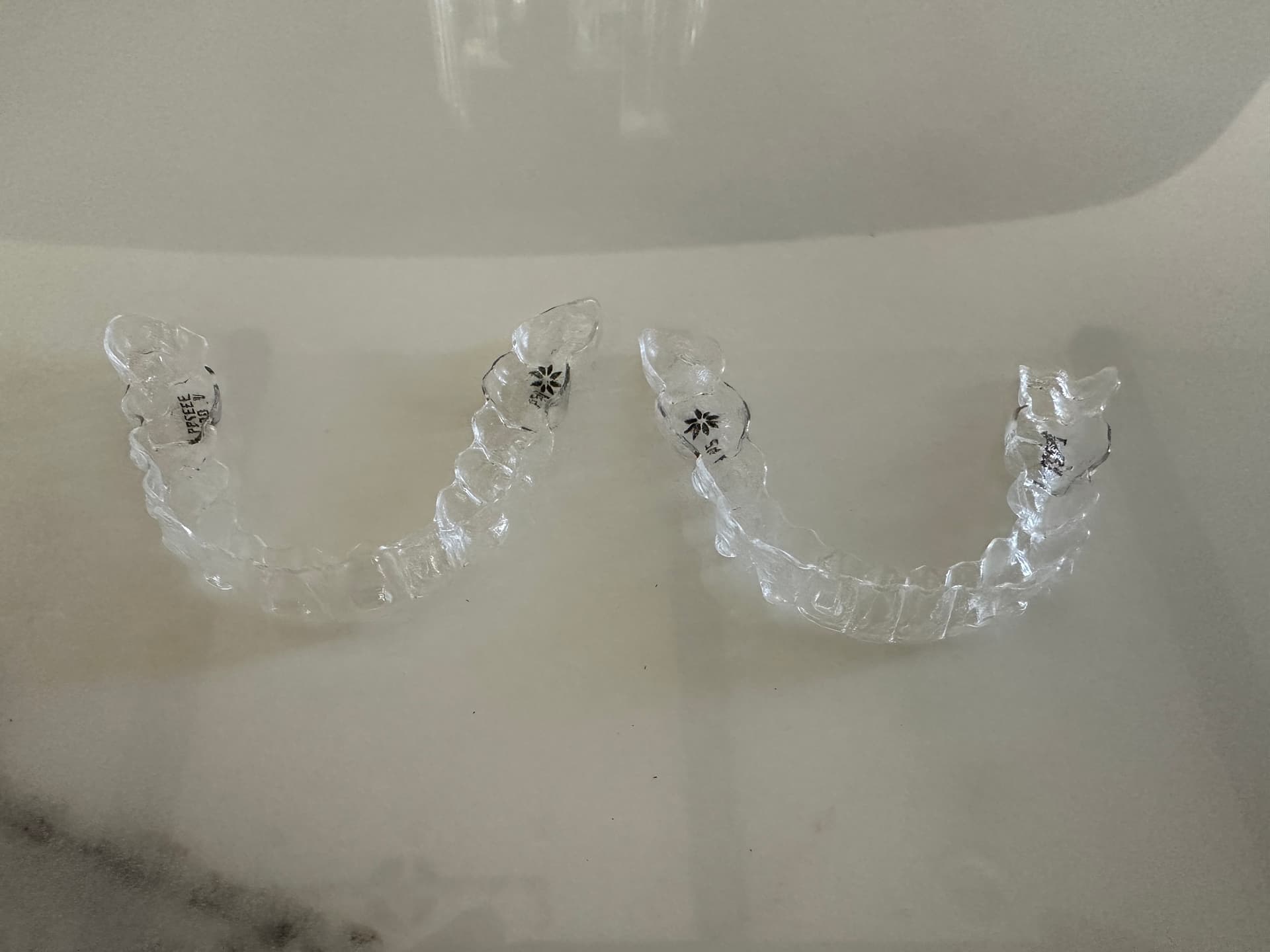
Invisalign is generally faster than braces, but only if you wear it properly:
- Invisalign average: 6 to 18 months for most cases. Mild cases (minor crowding, small gaps) can finish in 3 to 6 months. Complex cases can take 24 months.
- Braces average: 12 to 24 months for most cases. Mild cases can finish in 6 to 12 months. Complex cases can take 30+ months.
The catch with Invisalign: it only works when you wear it. The required wear time is 22 hours per day, every day. If you take your trays out for meals and forget to put them back in, or wear them only at night, treatment slows down or stalls completely. Braces work 24 hours a day because you cannot remove them, which makes treatment time more predictable.
For honest cases, Invisalign treatment with full compliance often finishes 3 to 6 months faster than equivalent braces treatment because of the precise, computer-planned tooth movements and weekly tray changes.
Comfort: What Does Each Feel Like?
Invisalign Comfort
Most patients describe Invisalign as a constant gentle pressure on the teeth. Each new tray feels tight for the first 1 to 2 days as your teeth shift, then becomes comfortable. The trays have smooth plastic edges that do not irritate the inside of your mouth. Soreness from a new tray usually responds well to over-the-counter ibuprofen.
Braces Comfort
Traditional braces involve metal brackets glued to your teeth and a wire connecting them. In the first few weeks, the brackets and wires rub against the inside of your cheeks and lips, often causing small sores that heal as your mouth adjusts. Wax over the brackets helps. After each tightening visit (every 4 to 6 weeks), your teeth will be sore for 2 to 3 days as the new wire applies pressure. Most patients find this manageable with ibuprofen.
On balance, most patients report Invisalign is more comfortable, especially after the first month of treatment.
Appearance: How Noticeable Is Each?
This is where Invisalign has its biggest advantage. The clear plastic trays are nearly invisible from a normal conversation distance. People you talk to often will not notice you are wearing them at all unless they look closely. There are no brackets, no wires, and no metal to see.
Traditional metal braces are clearly visible. Ceramic braces use tooth-colored brackets that are less noticeable than metal but still visible up close, and the wire connecting them is usually silver. Lingual braces (placed behind the teeth) are invisible from the front but cost significantly more.
For adults who present professionally in meetings or photos, this difference matters. For teens and kids, it can also matter socially, though many teens enjoy customizing their braces with colored elastics.
Effectiveness: Can Both Fix the Same Problems?
For most common orthodontic issues, both work equally well. The differences show up in more complex cases.
What Both Can Fix
- Crowded teeth (mild to moderate)
- Spaced or gapped teeth
- Mild to moderate overbite (less than 4mm)
- Mild to moderate underbite
- Crossbite (most cases)
- Open bite (mild to moderate)
- Rotated teeth (mild to moderate)
- Relapse after previous orthodontic treatment
Where Braces Have an Edge
- Severe rotations of teeth, especially molars and canines
- Large vertical movements like intruding or extruding teeth significantly
- Severe bite problems (overbite greater than 4mm, deep bites)
- Cases requiring tooth extractions followed by space closure
- Patients who cannot comply with the 22-hour wear requirement
- Significantly impacted teeth that need to be brought into position
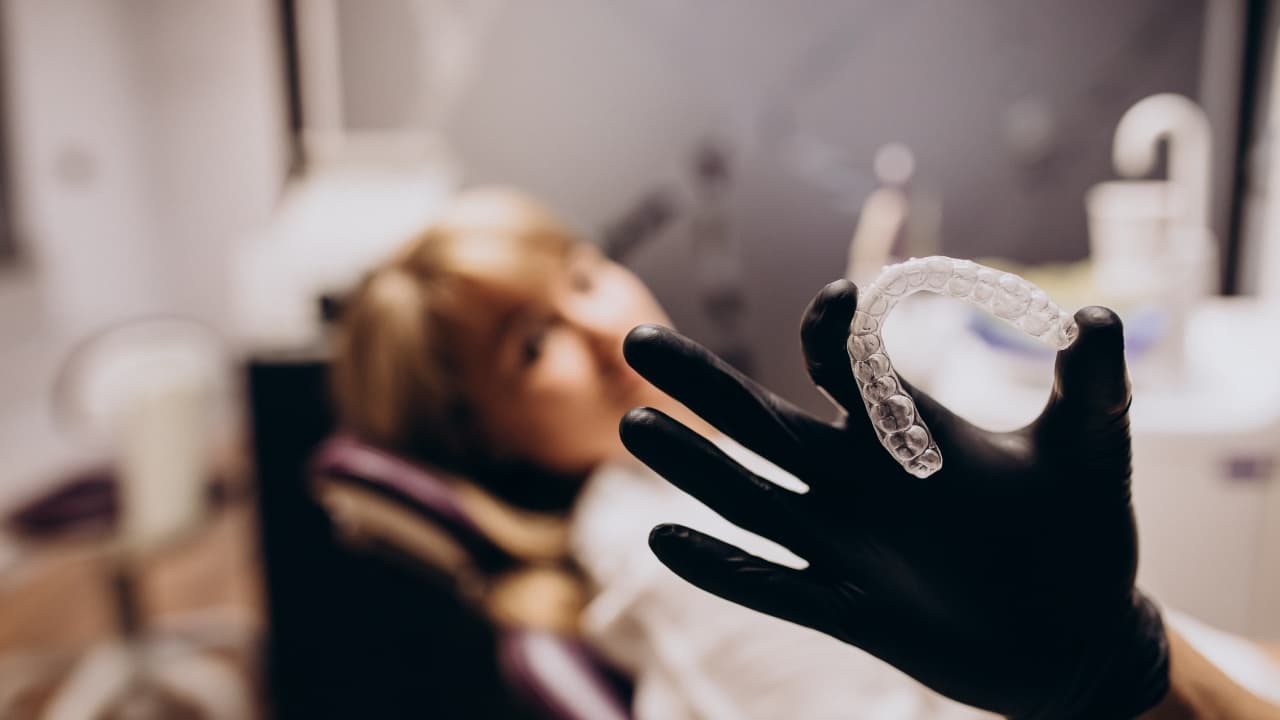
Modern Invisalign has closed the gap on many of these. Attachments (small tooth-colored bumps glued to teeth) and elastics extend what Invisalign can do. But for true bracket-and-wire orthodontics with maximum force control, braces remain the standard for severe cases.
For more detail on Invisalign specifically, see Does Invisalign Work? and for braces, see Types of Braces: A Complete Guide.
Lifestyle: Daily Differences
Eating
Invisalign wins here. You remove the trays to eat, so there are no food restrictions. You can eat popcorn, corn on the cob, apples, nuts, and anything else you would normally eat. With braces, you need to avoid hard foods (whole apples, ice, hard candy), sticky foods (caramel, gum, taffy), and chewy foods (bagels, beef jerky) that can break brackets or get stuck.
Brushing and Flossing
Invisalign wins again. You remove the trays to brush and floss, so your daily routine stays exactly the same. With braces, you need to carefully brush around brackets and use special tools (threaders, proxabrushes, or water flossers) to clean between teeth and around wires. Plaque builds up easily around brackets, which can lead to white spots, cavities, or gum inflammation if hygiene slips.
Office Visits
Braces are seen every 4 to 6 weeks for adjustments. Invisalign is seen every 6 to 10 weeks to check progress and hand out the next batch of trays. Both are quick visits (15 to 30 minutes typically).
Travel and Activities
Invisalign is easier for travel because you carry trays with you and there is no risk of broken brackets needing emergency repair. Athletes in contact sports also prefer Invisalign because there are no brackets to cut the inside of the mouth on impact. A mouthguard fits over Invisalign without modification.
Who Should Choose Which?
Invisalign Is Probably Better If You
- Are an adult who wants discreet treatment
- Have a mild to moderate alignment issue
- Will reliably wear trays 22 hours a day
- Want to maintain your normal eating and brushing routine
- Play contact sports or perform musical instruments
- Have professional or social situations that demand a clean look
- Are a responsible teen who understands the compliance requirement
Braces Are Probably Better If You
- Have a severe alignment or bite issue
- Need treatment that involves tooth extractions
- Know you would not consistently wear removable trays
- Are a younger teen who might lose or skip trays
- Want a treatment with predictable, set-it-and-forget-it timing
- Prefer fixed treatment over daily compliance responsibility
- Have a complex bite problem that may require additional appliances
When Both Are Used
Some complex cases benefit from a combination approach: braces for the first 6 to 12 months to handle major movements, then transitioning to Invisalign for the final refinement. This is less common but can give the best of both worlds for the right case. Other cases use braces first, then an Invisalign-style retainer to maintain results.
After Treatment: Retainers Are Forever
Both Invisalign and braces require lifetime retainer wear to maintain results. Without retainers, teeth shift back toward their original position over months and years, wasting your orthodontic investment. Most patients wear retainers nightly for the first year and then a few nights a week indefinitely.
Retainers themselves cost $150 to $500 each, with replacements needed every few years. See our retainer cost page for typical pricing.
Bonus: True Cost Over 5 Years
When you compare total cost including retainers and follow-up:
- Invisalign total: $4,000 to $5,500 treatment + $200 to $500 initial retainers + $200 to $500 replacement retainer at year 3 = roughly $4,500 to $6,500 over 5 years.
- Braces total: $3,500 to $5,000 treatment + $200 to $500 initial retainers + $200 to $500 replacement retainer at year 3 = roughly $4,000 to $6,000 over 5 years.
The true cost difference is usually $300 to $700 over 5 years. For many patients, that gap is small enough that other factors (appearance, comfort, lifestyle) drive the decision more than price.
The Bottom Line
Both Invisalign and braces produce excellent results when used for the right case by an experienced provider. Invisalign wins on discretion, comfort, eating freedom, and ease of hygiene. Braces win on predictability, ability to handle severe cases, and not requiring daily compliance. The cost difference is small enough that price rarely should be the deciding factor.
The honest answer to which is better depends entirely on your case and your lifestyle. A free consultation with an experienced provider is the best way to find out which option fits you. At MySmile Dental Care in Anaheim Hills, Dr. Bhatia provides both Invisalign and offers honest, case-specific recommendations, including pointing patients toward braces when that is the better option for their case. If cost is the main barrier, see our affordable Invisalign page for $0-down financing options that make treatment accessible.
Frequently Asked Questions
Is Invisalign as effective as braces?
For mild to moderate cases, Invisalign is just as effective as traditional braces. For severe cases involving complex tooth rotations, large gaps, or significant bite issues, braces still have a slight edge because they can apply continuous force from multiple directions. Most general orthodontic cases can be treated successfully with either.
Does Invisalign cost more than braces?
Yes, slightly. Invisalign typically costs $2,500 to $7,000 for full treatment. Traditional metal braces typically cost $2,500 to $6,500. Ceramic (clear) braces run $3,000 to $7,000. The price gap has narrowed significantly over the last decade. In many cases, the cost is nearly identical.
Which is faster, Invisalign or braces?
Invisalign typically takes 6 to 18 months for most cases, while traditional braces take 12 to 24 months on average. However, Invisalign only works as fast as you wear it. If you take the trays out for longer than the recommended 22 hours per day, treatment slows down or stalls. Braces work 24/7 because you cannot remove them.
Does Invisalign hurt less than braces?
Most patients report Invisalign is more comfortable. Braces cause friction against the cheeks and lips, especially in the first few weeks, and tightening visits can be sore for 2 to 3 days. Invisalign causes pressure soreness for the first day or two of each new tray, but no cuts or sores from brackets and wires.
Can Invisalign fix the same problems as braces?
Invisalign can fix most common alignment issues: crowding, gaps, mild to moderate overbites, underbites, crossbites, and rotated teeth. Braces are still preferred for severe cases involving large bite corrections, significantly impacted teeth, or cases requiring tooth extractions. Your dentist will tell you honestly which option fits your specific case after an exam.
Are braces or Invisalign better for adults?
Most adults prefer Invisalign because it is nearly invisible and does not affect professional appearance during meetings, photos, or social events. Adults also tend to be highly compliant with the 22-hour wear requirement, which makes Invisalign work well. For adults with severe alignment issues, braces may still be recommended for predictable results.
Can teens get Invisalign?
Yes. Invisalign Teen includes compliance indicators (blue dots that fade when worn enough) and replacement trays for lost aligners. The key factor is responsibility. A teen who will reliably wear trays 22 hours a day and not lose them is a good candidate. A teen who will forget or remove them often will get better results with braces.
Which is better for fixing an overbite, Invisalign or braces?
For mild to moderate overbites, Invisalign with attachments and elastics works well. For severe overbites, deep bites, or skeletal jaw discrepancies, braces (sometimes with jaw surgery) give more predictable results. The threshold is roughly: less than 4mm of overbite usually responds to Invisalign, more than 4mm typically benefits from braces.
Disclaimer
This article is for informational purposes only and does not constitute dental or medical advice. It is not a substitute for professional dental care, diagnosis, or treatment. Always consult your dentist or other qualified health care provider with any questions you may have about a dental condition or treatment. Reading this content does not establish a patient-provider relationship with MySmile Dental Care.
Invisalign or Braces? Get a Personalized Recommendation
Dr. Bhatia provides honest, case-specific recommendations on whether Invisalign or braces will work best for you. Free consultations include a smile assessment, treatment timeline, exact pricing, and financing options through Cherry, CareCredit, and Sunbit.