
 Emily Carter
At a Glance
- Teeth turn yellow from a mix of surface staining (extrinsic) and changes within the tooth itself (intrinsic), and the cause determines which treatment will work.
- Common culprits include coffee, tea, red wine, tobacco, aging, thin enamel, genetics, and certain medications taken in childhood.
- Brushing alone often cannot remove yellow that comes from inside the tooth or from staining below the enamel surface.
- Professional in-office whitening lightens teeth several shades in one visit. Custom take-home trays and whitening strips are slower but effective for surface yellowing.
- If whitening does not work, veneers or dental bonding can cover deep intrinsic discoloration like tetracycline staining or fluorosis.
If you brush twice a day and your teeth still look yellow, you are not alone, and you are probably not doing anything wrong. Yellow teeth have many causes, and most of them have nothing to do with poor hygiene. Understanding which cause is at play in your mouth is the key to picking a treatment that will actually work.
Here is a complete guide to why teeth turn yellow, why some yellowing will not respond to brushing or whitening toothpaste, and what your options are for getting a brighter smile.
The Two Types of Tooth Yellowing
Before you can fix yellow teeth, you have to know which kind you have. Dentists divide tooth discoloration into two categories, and they respond to completely different treatments.
- Extrinsic yellowing sits on the outside of the tooth. Surface stains from coffee, tea, wine, berries, curry, and tobacco get deposited onto the enamel. A professional cleaning, whitening toothpaste, or whitening strips can lift much of this away.
- Intrinsic yellowing comes from inside the tooth. This includes the natural yellow color of dentin showing through thin enamel, age-related darkening, medication staining (especially from tetracycline antibiotics in childhood), excessive fluoride exposure during tooth development, and trauma. Surface treatments do not work on intrinsic yellowing because the discoloration is below the enamel.
Most adults have a combination of both. The treatment that works for you depends on the proportion of each and how dramatic a change you want.
Causes of Surface (Extrinsic) Yellowing
Surface stains build up on enamel from things you eat, drink, smoke, or chew. Anything that can stain a white shirt can stain your teeth, and the porous outer layer of enamel absorbs pigments over time.
Coffee, tea, and dark beverages
Coffee and tea both contain tannins, which bind to enamel and leave yellow-brown stains. Tea, especially black tea, actually stains more than coffee because of its higher tannin content. Red wine, cola, cranberry juice, and dark sports drinks all do the same.
Tobacco
Smoking and chewing tobacco deposit tar and nicotine onto the tooth surface, producing yellow to dark brown stains that worsen over time and are difficult to remove with regular brushing. The stains tend to concentrate along the gum line and on the inner surfaces of the front teeth. For more on this, this guide to removing cigarette stains walks through the home and professional treatments that work.
Highly pigmented foods
Berries, tomato sauce, soy sauce, beets, curry, and balsamic vinegar all contain pigments that cling to enamel. They are not as bad as tobacco or daily coffee, but they contribute over years.
Poor oral hygiene
Plaque is yellow when it builds up, and when it hardens into tartar it looks even darker. Tartar also absorbs stains more aggressively than clean enamel. Plaque can build up even with regular brushing if your technique misses certain spots, and only a dental cleaning can remove tartar once it has formed.
Causes of Intrinsic Yellowing
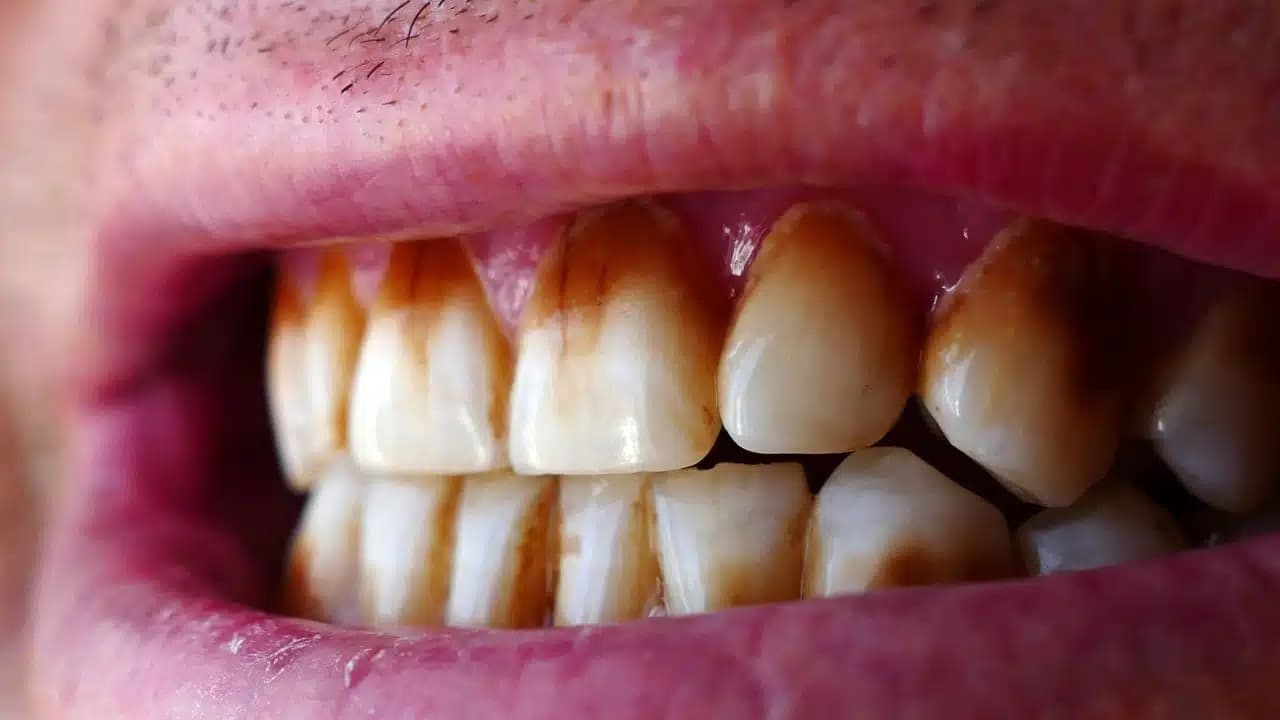
Intrinsic yellow comes from inside the tooth. Brushing harder will not change it, and most whitening toothpastes will barely touch it. Here are the most common causes.
Thin enamel and visible dentin
Tooth enamel is white and slightly translucent. Underneath is dentin, which is naturally yellow. When enamel is thin, either from genetics or wear, the yellow dentin shows through. Many people have naturally yellow-looking teeth simply because their enamel is on the thinner side from birth.
Aging
Enamel gradually wears thinner over decades from chewing, brushing, and acid exposure. Meanwhile, the dentin layer actually thickens with age as the tooth lays down more secondary dentin. The combined effect is that older teeth look more yellow than younger teeth, even with identical hygiene.
Genetics
The base color of your teeth is largely inherited. Some people are born with enamel that is whiter and more opaque, while others have enamel that is naturally more translucent and lets more yellow dentin show through. If your parents have yellow teeth, you probably will too.
Tetracycline staining
Tetracycline and doxycycline antibiotics taken during tooth development (in pregnancy or before age 8) can bond to forming dentin and produce gray, brown, or yellow bands that go all the way through the tooth. This is one of the most difficult types of staining to treat, and it usually requires veneers rather than whitening.
Fluorosis
Excessive fluoride during the years when teeth are forming can leave white spots, yellow streaks, or brown patches. Mild fluorosis is cosmetic only and does not affect tooth health.
Tooth trauma
A blow to a tooth can cause the inner pulp to die, which often turns the tooth gray or yellow over the months that follow. A single tooth that has changed color compared to its neighbors should be evaluated by a dentist, since it may need a root canal.
Medications and medical conditions
Some medications, including certain antihistamines, antipsychotics, and blood pressure drugs, can darken teeth in adults. Chemotherapy, head and neck radiation, and conditions that affect tooth development like amelogenesis imperfecta can all cause intrinsic discoloration.
Why Brushing Alone May Not Fix Your Yellow Teeth
Patients often tell us they brush three times a day and their teeth still look yellow. There are a few reasons this is so common.
- Brushing cannot remove intrinsic discoloration. Toothbrushes only scrub the outer enamel. They have no way to reach the dentin or the inside of the tooth where most age-related and genetic yellowing lives.
- Tartar holds onto stains. If you have tartar buildup, especially along the gum line, brushing will not remove it. Only a professional dental cleaning can. The tartar itself looks yellow and traps additional stains.
- Overbrushing can make yellow worse. Brushing too hard, especially with a hard-bristled brush or right after eating acidic foods, wears enamel down faster. Thinner enamel reveals more yellow dentin underneath. If your gums have started to recede, the exposed root surface is also yellow and cannot be brushed away.
- Whitening toothpastes have limits. They can remove some surface stains over weeks, but the FDA only allows them to contain low concentrations of peroxide. They cannot deliver dramatic whitening on their own.
Treatment Options for Yellow Teeth
Once you know the cause, you can pick a treatment that actually matches. Here are your options from least to most intensive.
Professional dental cleaning
Before considering any whitening, get a professional cleaning. Removing plaque and tartar can make teeth look noticeably brighter, and you cannot accurately judge what whitening will achieve until your teeth are clean. Whitening only works on tooth structure, not tartar.
Whitening toothpaste
Whitening toothpastes use mild abrasives and sometimes low-dose peroxide to remove surface stains. They work slowly, with most products producing about one shade of improvement over four to six weeks of twice-daily use. They are best for maintenance after professional whitening, not for dramatic change.
Whitening strips and over-the-counter trays
Strips and OTC tray kits deliver low concentrations of hydrogen peroxide directly to the tooth surface. They can lighten teeth by one to three shades with consistent use over two to three weeks. Strips do not always fit the curve of each tooth perfectly, so results can be uneven on crooked teeth. Whitening strips work but have clear limits compared to professional options.
Custom take-home whitening trays
Your dentist takes an impression of your teeth and creates a tray that fits exactly. You fill it with prescription-strength whitening gel and wear it for 30 to 60 minutes daily over one to two weeks. Results are more dramatic and more even than strips because the gel stays in contact with the entire tooth surface.
In-office professional whitening
This is the fastest and most powerful whitening option. A dentist applies a high-concentration peroxide gel directly to your teeth, sometimes activated with a light, while protecting your gums. In a single 60 to 90 minute appointment, most patients see their teeth lighten by five to eight shades. For more detail on cost, this breakdown compares the price of each whitening method.
Dental bonding
For yellow teeth that do not respond well to whitening, especially from tetracycline staining or trauma, tooth-colored composite resin can be bonded over the discolored area to cover it. Bonding is less expensive than veneers and can be done in a single visit. Dental bonding is also commonly used for chipped or worn teeth, and the same material works for cosmetic shade correction.
Veneers
Porcelain veneers are thin custom-made shells that cover the front of your teeth. They are the go-to solution for severe intrinsic discoloration like tetracycline staining or fluorosis, where whitening will not work. Veneers also reshape teeth and last 10 to 15 years or more with good care.
How to Prevent Yellow Teeth
You cannot stop aging or change your genetics, but you can slow down the staining process and protect your enamel.
- Rinse after staining drinks. Swish water in your mouth after coffee, tea, or wine to dilute pigments before they bind to enamel.
- Use a straw for cold dark drinks. A straw delivers the liquid past the front teeth and reduces contact with enamel. This works best for iced coffee, iced tea, and cola.
- Wait before brushing. Brushing right after acidic food or drink can wear enamel. Wait at least 30 minutes so saliva can neutralize the acid first.
- Use a soft-bristled brush with gentle pressure. Hard brushing wears enamel and exposes more yellow dentin.
- Quit tobacco. Smoking and chewing tobacco are the fastest ways to permanently yellow your teeth, and the staining is extremely difficult to reverse.
- Get regular professional cleanings. A cleaning every six months removes surface stains and tartar before they accumulate. For most people, a cleaning alone significantly brightens teeth.
When Yellow Teeth Need a Dentist Visit
Most yellow teeth are cosmetic and not a health issue. But you should book an exam if:
- A single tooth has darkened compared to the others (could signal internal damage or a dying nerve)
- You see brown spots or pits in the enamel (possible decay)
- Yellow is concentrated at the gum line and feels rough (tartar buildup)
- Yellow appeared suddenly without any clear cause
- You have pain or sensitivity along with the discoloration
A general dentistry checkup can identify the cause and rule out anything more serious before you invest in whitening.
The Bottom Line
Yellow teeth are normal, common, and almost always treatable. The trick is matching the treatment to the cause. Surface stains from coffee, tea, or tobacco respond well to whitening. Age-related and genetic yellow respond best to professional in-office or custom-tray whitening. Deep intrinsic stains from medications or trauma may need veneers or bonding instead.
If you are not sure why your teeth look yellow or which option will actually work, the best first step is an exam. Dr. Bhatia at MySmile Dental Care in Anaheim Hills will evaluate your enamel, identify the type of staining you have, and recommend the right path to a brighter smile.
Frequently Asked Questions
Why are my teeth yellow even though I brush them every day?
Brushing only removes plaque and surface debris. It cannot change the color of the dentin layer underneath your enamel, which naturally darkens with age and shows through as enamel thins. Coffee, tea, wine, and tobacco can also stain enamel below the surface where a toothbrush cannot reach. If you brush diligently and your teeth still look yellow, the discoloration is most likely intrinsic and needs professional whitening or cosmetic treatment to address.
Can yellow teeth become white again?
Yes, in most cases. Surface stains from food, drink, and tobacco respond well to professional cleaning and whitening with hydrogen peroxide. Intrinsic yellowing from aging or thin enamel can also be lightened with in-office whitening, take-home trays, or cosmetic options like veneers and bonding when whitening alone is not enough. The right treatment depends on what is causing the discoloration.
Are yellow teeth still healthy?
Often, yes. Yellow teeth are not always a sign of poor health. Many people have naturally yellow-tinted teeth because the dentin layer beneath the enamel is yellow by nature. As enamel thins with age, more of that yellow shows through. However, sudden yellowing or yellow patches in specific spots can signal decay, plaque buildup, or enamel erosion, so it is worth getting a dental exam to rule out underlying issues.
What is the fastest way to whiten yellow teeth?
In-office professional whitening is the fastest method, lightening teeth several shades in a single 60 to 90 minute visit. Dentists use higher concentrations of hydrogen peroxide than over-the-counter products are allowed to contain, along with light activation in some cases. Take-home custom trays from your dentist deliver strong results over one to two weeks. Whitening strips and toothpastes work slowly over several weeks and give more modest results.
Does whitening toothpaste actually work on yellow teeth?
Whitening toothpastes can remove surface stains and may lighten teeth by one shade over four to six weeks of consistent use. They rely on mild abrasives and sometimes low concentrations of peroxide. They cannot bleach the inside of the tooth or change intrinsic yellowing. If you want noticeable whitening, professional treatment is far more effective than any toothpaste.
Why are my teeth yellow at the gum line?
Yellow or brown discoloration along the gum line is usually tartar (hardened plaque). Tartar absorbs stains from food and drink and bonds to the tooth in a way that brushing cannot remove. Only a dental cleaning can remove tartar. If the area looks soft or has a hole, it could be decay starting at the gum line, which needs a filling.
Will my teeth get more yellow as I age?
Most people's teeth do gradually yellow with age. This happens because enamel naturally wears thinner over decades, exposing more of the yellow dentin beneath. Years of staining beverages and foods also accumulate. The good news is that age-related yellowing responds well to whitening treatments, and protecting your enamel can slow the process.
Disclaimer
This article is for informational purposes only and does not constitute dental or medical advice. It is not a substitute for professional dental care, diagnosis, or treatment. Always consult your dentist or other qualified health care provider with any questions you may have about a dental condition or treatment. Reading this content does not establish a patient-provider relationship with MySmile Dental Care.
Tired of Yellow Teeth? Find Out What Will Actually Work.
Not all yellow teeth respond to the same treatment. Dr. Bhatia at MySmile Dental Care in Anaheim Hills will examine what is causing your discoloration and recommend the right whitening approach, from professional in-office treatment to take-home trays or cosmetic options. Get the smile you want with a personalized plan.