
 Emily Carter
At a Glance
- The classic cracked tooth symptom is sharp pain when biting that disappears as soon as you release pressure. Sensitivity to cold and sweet foods is also common.
- There are five main types: craze lines (harmless), fractured cusp, cracked tooth, split tooth, and vertical root fracture. Each has a different treatment.
- Teeth do not heal cracks on their own. Without treatment, most cracks deepen over time and can lead to infection, root canal, or extraction.
- Treatment depends on the depth and direction of the crack. Options range from dental bonding for shallow cracks to a crown, root canal plus crown, or extraction for deep cracks.
- See a dentist within a few days of suspecting a crack. Early diagnosis can mean a simple bonding repair instead of losing the tooth.
A cracked tooth is one of the trickiest problems in dentistry to diagnose. The pain often comes and goes, the crack is usually too small to see in a mirror, and it rarely shows up on a routine X-ray. Many patients live with the discomfort for months before they finally find the right tooth and the right treatment.
Knowing what a cracked tooth actually feels like and what the different types of cracks look like is the fastest way to get the right help. Here is how to spot a cracked tooth, how the five main types differ, and what treatment looks like for each.
The Classic Symptoms of a Cracked Tooth
Cracked teeth do not follow the same pattern as cavities or abscesses. The hallmark signs are:
- Sharp pain when you bite down, and a release of pain when you let go. This is the single most reliable sign. The two halves of the crack press apart when you chew and snap back together when you release, which irritates the nerve inside.
- Pain that comes and goes. A cracked tooth rarely hurts constantly. You may feel fine for days, then have an episode when you bite a hard piece of bread or chew on the wrong side.
- Sensitivity to cold, hot, and sweet foods that fades quickly. Cold water makes the tooth zing, but the pain disappears within a few seconds. If the pain lingers longer than 30 seconds, the crack has likely reached the pulp.
- Difficulty pinpointing which tooth hurts. Many patients can only narrow it down to a side of the mouth. The nerve fibers in the upper and lower jaws share pathways, so the brain often misreads which tooth is sending the signal.
- A tongue that catches on something rough. Some cracks chip off a small piece of enamel, leaving a sharp edge you can feel with your tongue.
- Pain when you stop chewing, not while you are chewing. The rebound after biting is what triggers the nerve, so the second after you release a hard piece of food is often the most painful.
If you have constant, throbbing pain that wakes you up at night, the problem has moved past a simple crack into the pulp. That is closer to a tooth abscess and needs same-day care.
The Five Types of Cracked Teeth
Dentists classify cracks by where they sit, which direction they run, and how deep they go. The five categories below are the ones used by the American Association of Endodontists, and the treatment for each is different.
1. Craze lines
Craze lines are tiny, shallow cracks limited to the outer enamel. They are extremely common in adults, especially on the front teeth, and usually cause no pain or sensitivity. Most people only notice them because they catch the light at certain angles.
Craze lines almost never need treatment. If you are bothered by the appearance, cosmetic options like dental bonding or veneers can hide them. Otherwise, they are best left alone.
2. Fractured cusp
A fractured cusp is a piece of the chewing surface that breaks off the tooth, usually around an old filling. The break tends to follow the edge of the filling, so the patient often notices a missing chunk of tooth around a silver or white restoration. Sensitivity is usually mild because the pulp is rarely involved.
Treatment is usually a new filling or, more often, a dental crown to cover the weakened cusp and restore the bite. Bonding can sometimes work for small fractures that do not bear heavy chewing pressure.
3. Cracked tooth
A true cracked tooth has a crack that starts at the chewing surface and runs vertically toward the root. This is the type that causes the textbook symptoms above, and it is what most patients mean when they say they have a cracked tooth. The crack may stop short of the gum line or extend all the way down to the root.
Treatment depends on how deep the crack reaches. A shallow crack that has not entered the pulp can often be saved with a crown to hold the two halves together. If the crack has reached the pulp, you usually need a root canal first, followed by a crown. If the crack runs below the gum line, the tooth often cannot be saved.
4. Split tooth
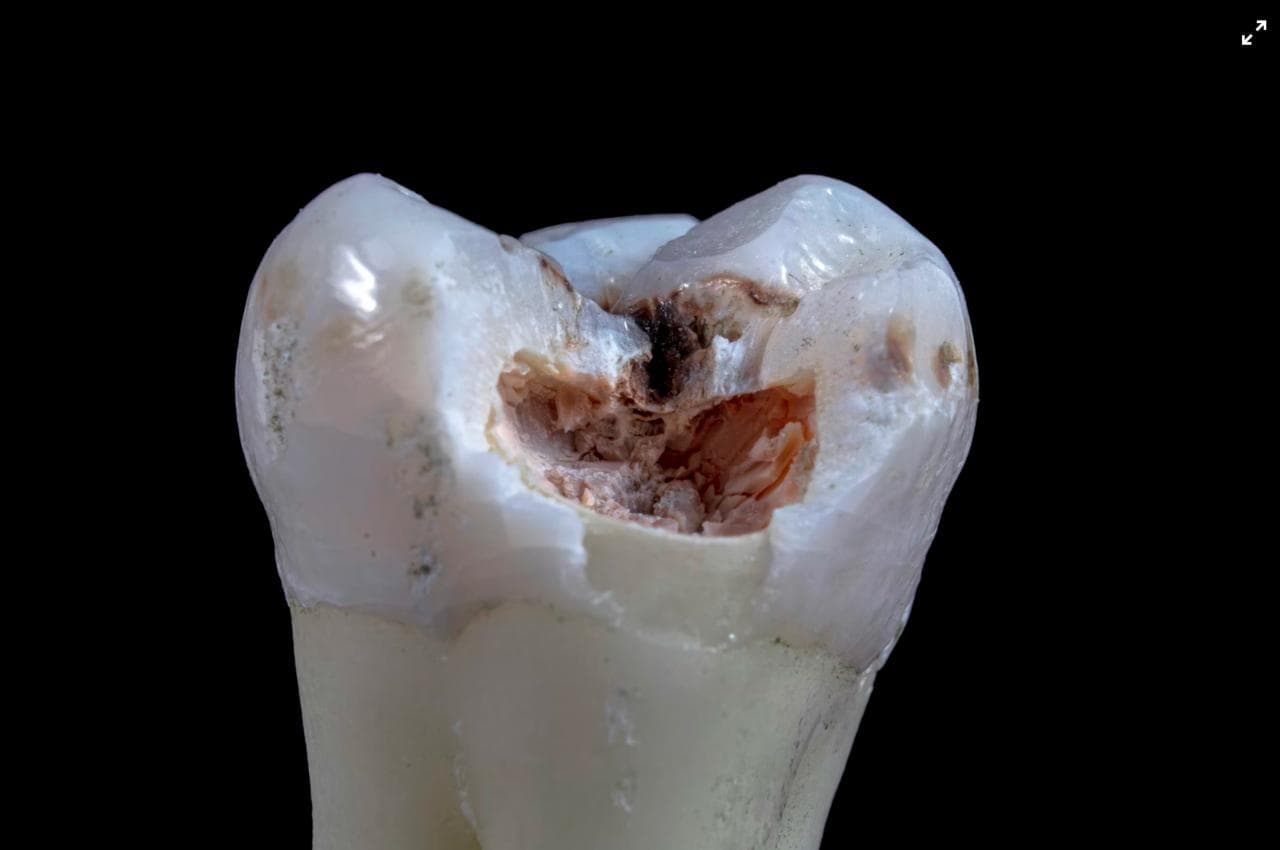
A split tooth is what an untreated cracked tooth eventually becomes. The crack has progressed so far that the tooth is now in two distinct segments that can be separated. At this stage, the tooth almost never can be saved as one unit.
Treatment usually involves removing one half of the tooth and either restoring the remaining piece with a crown (rare) or extracting the tooth entirely and replacing it with a dental implant or bridge. Catching the crack earlier, while it is still one piece, is the difference between keeping and losing the tooth.
5. Vertical root fracture
A vertical root fracture starts at the root and travels up toward the chewing surface. These are the hardest cracks to detect because they usually cause minimal symptoms until the root develops an infection. They are most common in teeth that have already had a root canal.
Vertical root fractures almost always require extraction. Once diagnosed, the tooth is removed and the site is allowed to heal before considering a replacement option.
What Causes Cracked Teeth?
Cracks happen when force exceeds what the tooth structure can withstand. The most common causes are:
- Biting on something hard. Ice, popcorn kernels, hard candy, olive pits, and accidentally biting on bone are common triggers. The tooth often cracks on the same side patients prefer to chew on.
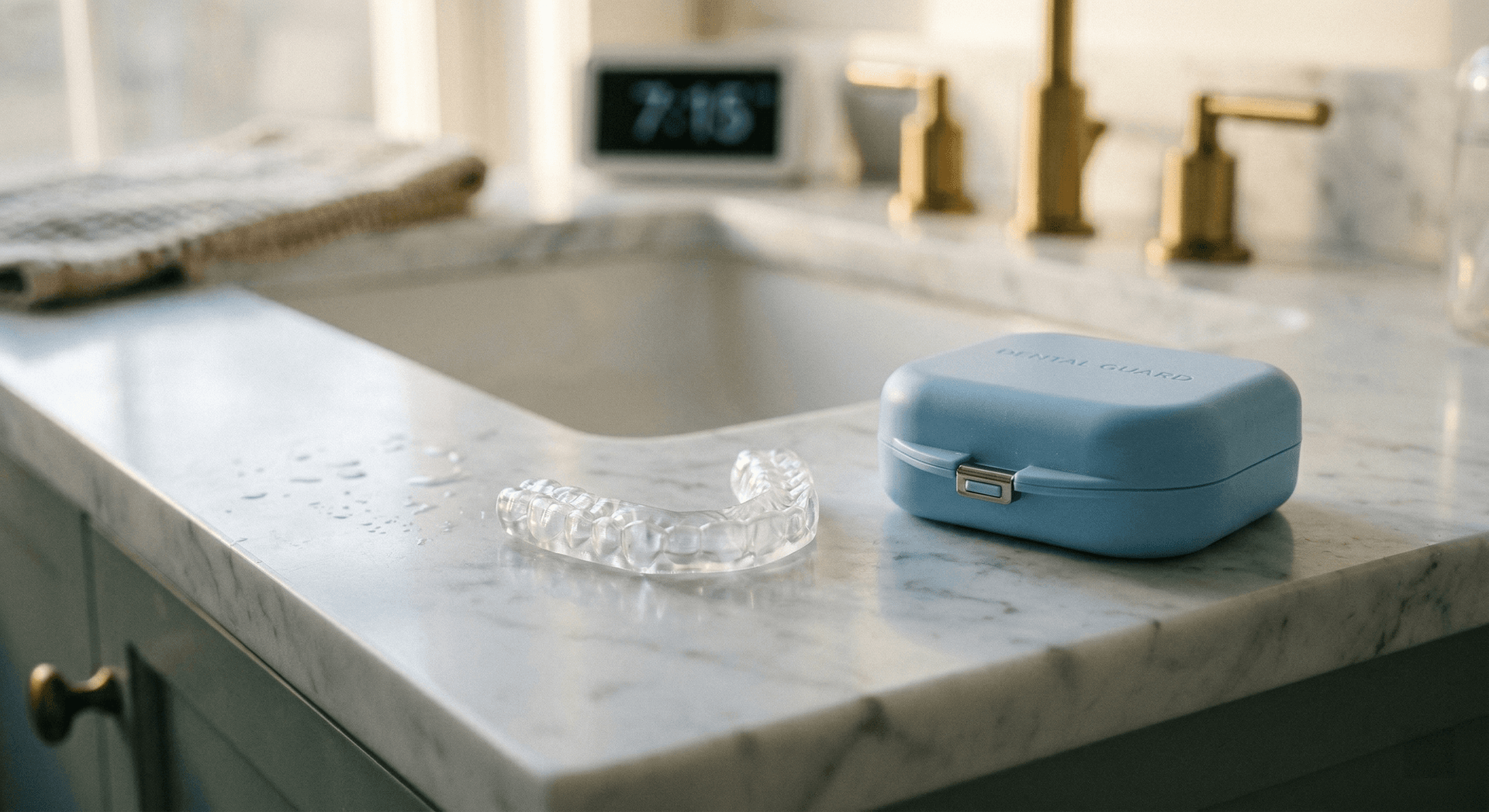
- Teeth grinding and clenching. Bruxism puts steady pressure on the teeth night after night and is one of the leading causes of cracked teeth in adults. A custom night guard can reduce the load substantially.
- Large fillings. A tooth with a large old amalgam or composite filling has less natural structure to absorb chewing pressure. The remaining tooth around the filling becomes a fracture-prone area.
- Sudden temperature changes. Chewing ice right after drinking hot coffee, or vice versa, can cause enamel to expand and contract enough to start a crack.
- Trauma. A blow to the mouth from a sports injury, fall, or car accident can crack a tooth even if no piece is visibly broken off.
- Age. Cracks are far more common after age 50 because enamel becomes less flexible and accumulated wear weakens the chewing surfaces.
- Previous root canal. Teeth that have had a root canal are more brittle because they no longer have a blood supply inside. They are also the most common site of vertical root fractures.
How Dentists Diagnose a Cracked Tooth
Cracked teeth are notoriously hard to confirm because most cracks are smaller than what an X-ray can show. A thorough exam usually uses several tools together:
- A bite stick. The dentist asks you to bite down on a small plastic stick over each cusp of the suspect tooth, one at a time. Pain on release from one specific cusp points to a crack in that area.
- Dye staining. A blue or methylene dye is brushed onto the tooth and washed off. Cracks hold the dye and become visible under magnification.
- Magnification and lighting. Dental loupes or a microscope, paired with strong transillumination from a fiber-optic light, can reveal cracks that are invisible to the naked eye.
- Cold testing. A cold stimulus is applied to each tooth in the area. A cracked tooth often reacts more sharply than its neighbors and returns to normal within a few seconds.
- X-rays. Standard X-rays will not show most cracks because they run parallel to the X-ray beam. They are still useful to rule out other problems like decay, bone loss around the root, or an abscess.
- CBCT (cone beam CT). A 3D scan is sometimes needed to look for vertical root fractures, especially in a tooth that has already had a root canal.
Treatment Options by Crack Type
Every crack has a treatment that fits the depth and direction of the damage. Choosing the right one is the difference between a tooth that lasts decades and a tooth that fails within a year.
Dental bonding
Bonding uses tooth-colored composite resin to fill small chips and seal shallow cracks limited to the enamel. It is the least invasive and least expensive option, but it does not strengthen the tooth and is not appropriate for cracks that reach the dentin or pulp.
Dental crown
A dental crown caps the entire chewing surface and holds the two halves of the cracked tooth together. This is the most common treatment for a true cracked tooth and for fractured cusps. Crowns are typically made of porcelain, zirconia, or porcelain fused to metal, and they last 10 to 15 years on average with good care. Cost runs roughly $900 to $2,000 per tooth, depending on the material and location.
Root canal and crown
If the crack has reached the pulp, the inflamed or infected nerve tissue must be removed with a root canal before the tooth is crowned. The root canal cleans out the inside of the tooth and seals it; the crown holds the structure together so the crack does not spread. Combined cost is usually $1,500 to $3,500 without insurance.

Extraction and replacement
Split teeth and most vertical root fractures cannot be saved. Extraction is followed by a healing period and then a replacement option such as a dental implant, a bridge, or, less commonly, a partial denture. A single-tooth implant looks and feels closest to the natural tooth and is the gold-standard replacement when bone volume allows.
Onlay or inlay
For some fractured cusps, an onlay (a partial-coverage restoration made of porcelain or composite) is enough to protect the tooth without removing as much structure as a crown would. The dentist decides between an onlay and a crown based on how much healthy tooth remains.
When to See a Dentist
Time matters with cracked teeth. The longer you wait, the deeper the crack tends to go. Book an appointment within the next few days if you notice any of the following:
- Sharp pain when you bite on one specific side
- A sudden zing of pain with cold or sweet foods that goes away quickly
- A rough edge on a tooth that you can feel with your tongue
- A piece of tooth that recently broke off, even if it does not hurt
- Pain after a recent dental filling or crown
- Discomfort after biting something hard
Some symptoms call for same-day emergency treatment instead of waiting for a regular appointment:
- Severe, constant throbbing pain that does not let up
- Visible swelling in the gum near the tooth
- A pimple-like bump on the gum (a sign of infection)
- A tooth that feels loose or has shifted position
- Fever or a bad taste in the mouth alongside the pain
What to Do Before Your Appointment
While you wait to see a dentist, the goal is to avoid making the crack worse and to keep the pain manageable:
- Chew on the other side of your mouth until the tooth has been treated.
- Avoid foods that are extremely hot, cold, or sticky. Each thermal cycle and each sticky bite can drive the crack deeper.
- Take an over-the-counter anti-inflammatory like ibuprofen for pain relief. Follow the dosing instructions on the bottle.
- Rinse with warm salt water (one teaspoon of salt in a cup of warm water) two or three times a day to keep the area clean.
- Cover a sharp edge with a small piece of orthodontic wax or sugar- free gum if it is cutting your tongue or cheek.
- Do not try to repair the tooth yourself with super glue or drugstore dental cement. These products are not safe for the inside of a tooth and can complicate the actual treatment.
If you also have constant tooth sensitivity between episodes, a desensitizing toothpaste can take the edge off while you wait.
How to Prevent Cracked Teeth
Once one tooth has cracked, the rest of your mouth is often at higher risk for the same kind of damage. A few changes can lower the chance:
- Stop chewing ice and hard candy. These are the two most common causes of cracked teeth that dentists see in practice.
- Wear a night guard if you grind. A custom guard fits the way over-the-counter ones cannot and protects the chewing surfaces while you sleep.
- Wear a mouthguard for contact sports. A custom or boil-and-bite guard is one of the cheapest insurance policies for your teeth.
- Replace large old fillings before they fail. If you have a silver filling that covers more than half of a tooth, ask your dentist whether a crown or onlay would be more protective than a replacement filling.
- Treat clenching driven by stress. Daytime clenching during work or driving can be just as damaging as night grinding. Awareness and stress management are the first line of defense.
- Get regular checkups. A six-month exam catches small cracks, weakened cusps, and worn restorations before they fail.
The Bottom Line
Sharp pain when you bite, sensitivity that fades quickly, and pain that comes and goes are the classic signs of a cracked tooth. Most cracks cannot be seen in a home mirror or even on a regular X-ray, which is why the diagnosis often takes a few specialized tests.
The good news is that catching a crack early almost always means a simpler, less expensive fix. The same crack that needs a crown today could need a root canal next month or an extraction next year. If you have had any of the symptoms above, book an exam with MySmile Dental Care in Anaheim Hills. Dr. Bhatia will use a bite stick, dye, and magnification to find the crack and put together a plan to save the tooth.
Frequently Asked Questions
How can I tell if I have a cracked tooth?
The most reliable sign is sharp pain when you bite down and a sudden release of pain when you let go. Cracked teeth are also unusually sensitive to cold, hot, and sweet foods, and the pain often comes and goes instead of being constant. Many cracks are too small to see, so a dentist may need to use a bite stick, a special dye, or magnification to confirm it.
Can a cracked tooth heal on its own?
No. Tooth enamel does not regenerate, so a crack cannot heal itself. Without treatment, the crack typically gets deeper over time as you continue to chew on the tooth. Catching a crack early is the difference between a simple bonding repair and needing a root canal or extraction later.
How long can you leave a cracked tooth untreated?
There is no safe waiting period. A shallow craze line in the enamel may be stable for years, but a true crack that reaches the dentin will almost always progress. Many cracks that started as a bonding-only repair end up needing a crown, a root canal, or extraction because the patient waited too long.
Does a cracked tooth need a crown?
Most cracked teeth do need a crown to hold the tooth together and stop the crack from spreading. Very shallow cracks limited to the enamel can sometimes be repaired with dental bonding. Deeper cracks that reach the pulp also need a root canal first, followed by a crown. The decision depends on how deep the crack goes and where it sits on the tooth.
What is cracked tooth syndrome?
Cracked tooth syndrome is the name for a tooth with a crack that is too small to see on an X-ray but causes real pain on biting and temperature changes. The symptoms can be confusing because they come and go and are often hard to localize. A dentist diagnoses it by isolating each cusp with a bite test and confirming which one triggers the pain.
Can a cracked tooth get infected?
Yes. Once a crack reaches the pulp, bacteria from saliva and plaque travel inside the tooth and can cause infection. Signs of infection include constant throbbing pain, swelling in the gum near the tooth, sensitivity that lingers for more than 30 seconds after cold or heat, or a pimple-like bump on the gum. An infected cracked tooth needs a root canal or extraction promptly.
Is a cracked tooth a dental emergency?
It depends on the symptoms. A cracked tooth with severe pain, visible damage, sharp edges cutting your tongue, or signs of infection needs same-day care. A tooth that is only mildly sensitive when you bite a certain way can usually wait a few days but should be seen within the week before the crack gets worse.
How much does cracked tooth treatment cost?
Costs vary by the treatment needed. Dental bonding for a shallow crack runs $200 to $600 per tooth. A crown is $900 to $2,000 without insurance. A root canal plus crown together typically runs $1,500 to $3,500. Extraction is usually $200 to $500 for a simple case and more for surgical extractions. Most dental insurance plans cover at least part of the restoration.
Disclaimer
This article is for informational purposes only and does not constitute dental or medical advice. It is not a substitute for professional dental care, diagnosis, or treatment. Always consult your dentist or other qualified health care provider with any questions you may have about a dental condition or treatment. Reading this content does not establish a patient-provider relationship with MySmile Dental Care.
Suspect a Cracked Tooth? Do Not Wait
A cracked tooth caught early can often be saved with a simple repair. Left alone, the same crack can spread to the root and force an extraction. Dr. Bhatia at MySmile Dental Care offers same-day exams for tooth pain, including the bite tests and magnification needed to find cracks that X-rays miss.