
 Emily Carter
At a Glance
- TMJ disorders are often manageable and sometimes fully curable, depending on the underlying cause.
- Common symptoms include jaw pain, clicking or popping sounds, headaches, ear pain, and difficulty opening your mouth fully.
- Most cases respond to conservative treatments like custom night guards, jaw exercises, stress management, and anti-inflammatory medication.
- Surgery is rarely needed. Fewer than 5% of TMJ patients require surgical intervention.
- See your dentist if jaw pain lasts more than two weeks, gets worse, or interferes with eating or speaking.
If you have ever woken up with a sore jaw, heard clicking when you chew, or felt pain radiating from your jaw to your ear, you may be dealing with a TMJ disorder. It is one of the most common reasons people visit their dentist for non-tooth-related pain, and the first question most people ask is whether it can be cured.
The honest answer: it depends on what is causing it. Some TMJ problems resolve completely with the right treatment. Others are chronic conditions that can be managed effectively so they stop interfering with your daily life. Here is what you need to know about TMJ causes, symptoms, and treatment options.
What Is TMJ?
TMJ stands for temporomandibular joint, the hinge joint on each side of your head that connects your lower jaw (mandible) to your skull. You use these joints every time you chew, talk, yawn, or swallow. They are among the most complex joints in your body, combining a hinge motion with a sliding motion and cushioned by a small disc of cartilage.
When people say they "have TMJ," they usually mean they have a TMJ disorder (technically called TMD, or temporomandibular disorder). This is any condition that causes pain, dysfunction, or abnormal movement in the jaw joint or the muscles that control it. According to the National Institute of Dental and Craniofacial Research, TMJ disorders affect more than 10 million Americans.
TMJ Symptoms: How to Know If You Have It
TMJ disorders produce a wide range of symptoms, which is part of why the condition often goes undiagnosed or gets confused with other problems. Common signs include:
- Jaw pain or tenderness, especially when chewing, talking, or opening your mouth wide
- Clicking, popping, or grinding sounds when you open or close your mouth
- Jaw locking in the open or closed position
- Difficulty opening your mouth fully or a feeling that your bite is "off"
- Headaches, particularly tension headaches around the temples
- Ear pain, ringing, or fullness without an ear infection
- Facial pain or swelling on one or both sides
- Neck and shoulder pain that seems connected to your jaw tension
Not everyone with TMJ clicking has a disorder. Occasional, painless clicking is common and usually harmless. It becomes a concern when the clicking is accompanied by pain, when the jaw locks, or when the symptoms interfere with eating or speaking.

What Causes TMJ Disorders?
TMJ disorders rarely have a single cause. In most cases, several factors combine to create the problem. The most common causes include:
Bruxism (Teeth Grinding and Clenching)
Teeth grinding is one of the leading causes of TMJ pain. When you clench or grind, you put enormous pressure on the jaw joint and surrounding muscles, sometimes with forces exceeding 250 pounds per square inch. Over time, this can wear down the joint's cartilage disc, inflame the muscles, and trigger chronic pain.
Stress and Muscle Tension
Stress causes many people to clench their jaw unconsciously during the day or tense their facial muscles. This sustained tension fatigues the muscles that control jaw movement and can trigger or worsen TMJ symptoms even without nighttime grinding.
Arthritis
Both osteoarthritis (wear-and-tear arthritis) and rheumatoid arthritis can affect the temporomandibular joint, breaking down the cartilage and causing pain, stiffness, and limited movement. Arthritis-related TMJ tends to be progressive and requires ongoing management.
Jaw Injury or Trauma
A blow to the jaw, whiplash injury, or even prolonged dental work that required keeping your mouth open for an extended period can damage the joint or displace the cartilage disc, leading to TMJ symptoms.
Bite Misalignment
When your upper and lower teeth do not fit together properly (malocclusion), your jaw muscles may compensate by shifting the jaw into an unnatural position. Over time, this compensation can strain the joint. In some cases, orthodontic treatment to correct the bite alignment can help relieve TMJ symptoms.
Sleep Disorders
TMJ disorders have a strong connection to sleep disorders like obstructive sleep apnea. Research suggests that people with sleep apnea are more likely to grind their teeth at night, and the disrupted sleep patterns can increase pain sensitivity and muscle tension in the jaw area.
So, Is TMJ Curable?
Whether TMJ can be cured depends entirely on the underlying cause:
- TMJ from stress or muscle tension: Often fully resolvable. Once you address the stress and break the clenching habit, the joint and muscles can heal completely.
- TMJ from bruxism: Very manageable and often effectively controlled with a custom night guard that protects the joint from grinding forces. Many patients become symptom-free with consistent night guard use.
- TMJ from a displaced disc: May resolve with conservative treatment or physical therapy. In some cases the disc repositions itself naturally. Persistent disc displacement may require more advanced treatment.
- TMJ from bite misalignment: Can improve significantly or resolve with orthodontic treatment or dental work that corrects the bite.
- TMJ from arthritis: Typically a chronic condition that is managed rather than cured. Treatment focuses on reducing pain, slowing progression, and maintaining function.
- TMJ from jaw injury: Often heals with time and conservative treatment, though severe structural damage may need surgical repair.
The good news is that the majority of TMJ cases fall into the first two categories (stress/tension and bruxism), which respond well to conservative, non-surgical treatment.
TMJ Treatment Options
Treatment for TMJ disorders follows a stepped approach, starting with the simplest and least invasive options. Most patients find relief without ever needing surgery.
Home Remedies and Self-Care
For mild TMJ symptoms, these measures can provide significant relief:
- Soft food diet. Give your jaw a rest by eating soft foods for a few days. Avoid hard, chewy, or crunchy foods that force your jaw to work harder.
- Ice and heat. Apply an ice pack to the affected side for 10 minutes, followed by a warm compress for 10 minutes. This reduces inflammation and relaxes tight muscles.
- Over-the-counter pain relief. Ibuprofen (Advil) or naproxen (Aleve) reduce both pain and inflammation. Follow the recommended dosage on the label.
- Jaw awareness. Pay attention to clenching during the day. When you notice it, rest your tongue on the roof of your mouth with your teeth slightly apart and lips closed. This is the natural resting position that minimizes joint stress.
- Avoid extreme jaw movements. Skip wide yawning, gum chewing, and habits like biting your nails or resting your chin on your hand.
Jaw Exercises and Physical Therapy
Specific exercises can strengthen the muscles around the jaw joint, improve range of motion, and reduce pain. A few commonly recommended exercises:
- Relaxed jaw exercise. Place your tongue on the roof of your mouth behind your upper front teeth. Let your teeth come apart while relaxing your jaw muscles completely. Hold for 5 to 10 seconds and repeat throughout the day.
- Chin tucks. Pull your chin straight back, creating a "double chin." Hold for 3 seconds. Repeat 10 times. This helps correct forward head posture, which contributes to jaw tension.
- Resisted opening. Place your thumb under your chin. Open your mouth slowly, pushing gently against your thumb for resistance. Hold for 3 to 6 seconds, then close slowly. Repeat 6 times.
- Side-to-side movement. Place an object about 1/4 inch thick (like two stacked tongue depressors) between your front teeth. Slowly move your jaw from side to side. As the exercise gets easier, increase the thickness of the object.
For more severe cases, a physical therapist who specializes in TMJ disorders can provide manual therapy, ultrasound treatment, and a customized exercise program.
Night Guards and Oral Appliances
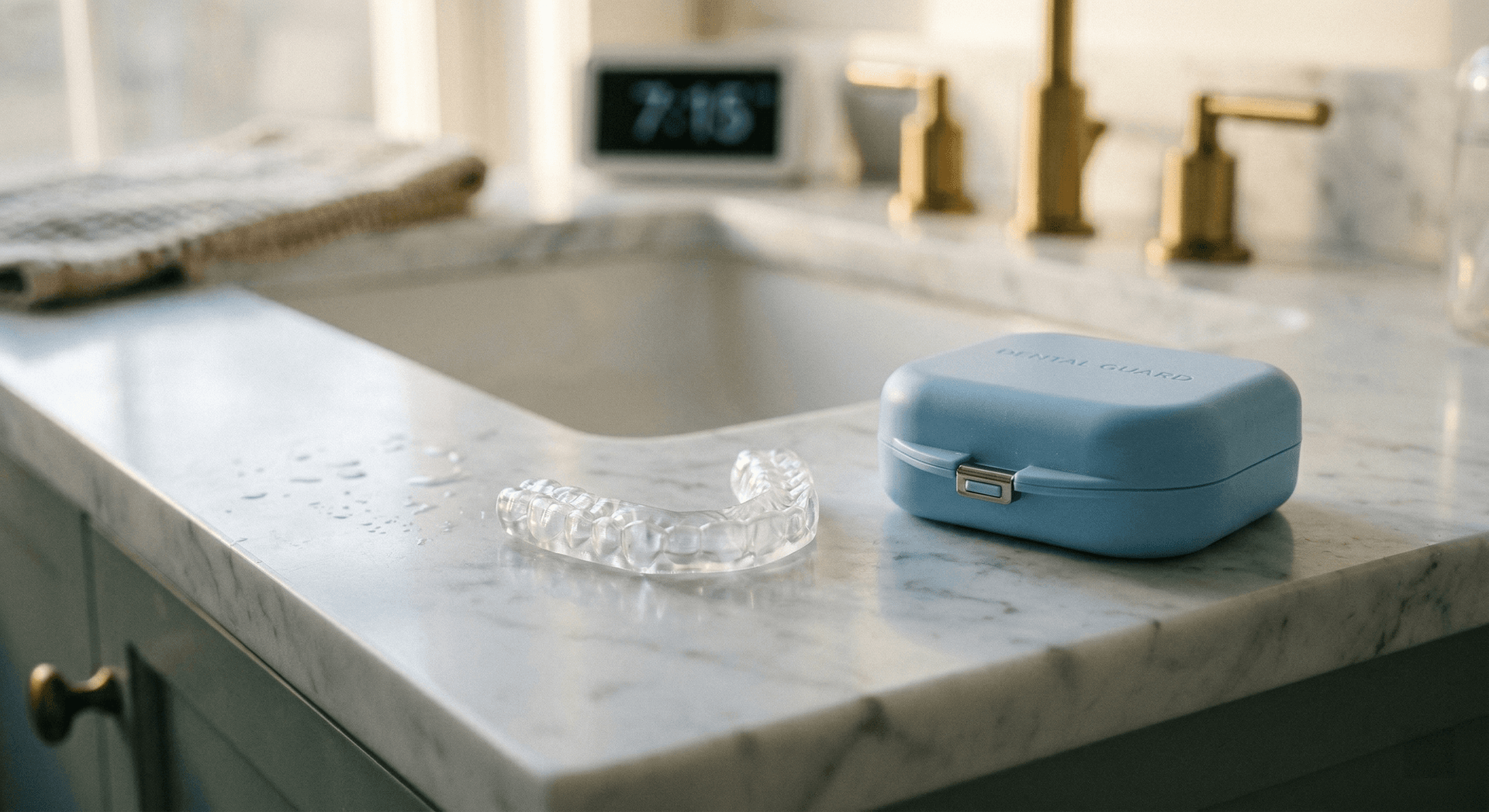
If bruxism is driving your TMJ symptoms, a custom night guard is often the single most effective treatment. A night guard is a thin, custom-made acrylic appliance that fits over your upper or lower teeth. It prevents direct tooth-to-tooth contact during grinding, absorbs the clenching force, and allows your jaw muscles to relax into a more natural position.
Custom night guards made by your dentist fit precisely to your bite and are significantly more comfortable and effective than over-the-counter options. They are also more durable, typically lasting three to five years with proper care.
Medication
Depending on the severity of your symptoms, your dentist or doctor may recommend:
- NSAIDs (ibuprofen, naproxen) for pain and inflammation
- Muscle relaxants for short-term relief of severe muscle spasms
- Tricyclic antidepressants at low doses for chronic pain management and to help with sleep
- Botox injections into the masseter (chewing) muscles, which can reduce clenching force and relieve pain for three to four months per treatment
Dental Treatments
If your TMJ is related to bite problems, dental treatment may be part of the solution:
- Orthodontics (Invisalign or braces) to correct bite alignment
- Dental crowns or bridges to restore proper bite height on worn or missing teeth
- Bite adjustment (equilibration) to reshape the biting surfaces of teeth for more even contact
Surgery (Rare Cases)
Surgery is considered a last resort and is recommended only when conservative treatments have failed after several months. Surgical options include:
- Arthrocentesis: A minimally invasive procedure where the joint is flushed with sterile fluid to remove debris and reduce inflammation. This can be done in-office with local anesthesia.
- Arthroscopy: A small camera is inserted into the joint through a tiny incision, allowing the surgeon to diagnose and sometimes repair problems with minimal recovery time.
- Open joint surgery: Reserved for the most severe cases involving structural damage, tumors, or bone deterioration that cannot be addressed through less invasive methods.

The TMJ and Sleep Connection
TMJ disorders and sleep problems are closely linked, and one often makes the other worse. People with sleep apnea are significantly more likely to grind their teeth at night, which directly stresses the temporomandibular joint. Poor sleep also lowers your pain threshold, meaning the same level of jaw tension that would not bother you after a good night's sleep can feel much worse after fragmented sleep.
If you have TMJ symptoms along with snoring, daytime fatigue, or waking up with headaches, talk to your dentist about whether a sleep study might be appropriate. Treating the sleep disorder often improves the TMJ symptoms as well.
When to See a Dentist for TMJ
Schedule an appointment with your dentist if you experience any of the following:
- Jaw pain that lasts more than two weeks
- Jaw locking in the open or closed position
- Difficulty eating due to pain or limited jaw movement
- Facial swelling on one side
- A sudden change in how your teeth fit together
- Persistent headaches or ear pain with no other explanation
- Tooth pain that your dentist cannot attribute to a dental problem
Your dentist will examine your jaw joint, check your bite alignment, listen for clicking or grinding sounds, and may take X-rays or refer you for imaging to evaluate the joint structure and cartilage disc. Early diagnosis means simpler treatment and better outcomes.
How to Prevent TMJ Problems
While you cannot prevent all causes of TMJ disorders, these habits can significantly reduce your risk:
- Manage stress. Find healthy outlets for stress before it manifests as jaw tension. Exercise, meditation, breathing exercises, and adequate sleep all help.
- Wear a night guard. If you grind your teeth, a custom night guard protects both your teeth and your jaw joint while you sleep.
- Maintain good posture. Forward head posture (common when working at a computer) changes the resting position of your jaw and adds strain to the TMJ. Keep your head aligned over your shoulders.
- Avoid excessive gum chewing. Constant chewing fatigues the jaw muscles and can aggravate the joint.
- Stay on top of dental care. Regular dental checkups catch early signs of bruxism and bite problems before they progress to TMJ disorders.
- Support your jaw during dental work. If you know that keeping your mouth open for long periods aggravates your jaw, let your dentist know. They can take breaks during procedures and use a bite block for support.
The Bottom Line
TMJ disorders are common, and the good news is that the vast majority of cases respond well to conservative, non-surgical treatment. Whether your jaw pain is caused by stress, grinding, injury, or a bite problem, there are effective options to reduce your pain and restore normal jaw function. The key is getting an accurate diagnosis so your treatment targets the actual cause, not just the symptoms.
At MySmile Dental Care in Anaheim Hills, Dr. Bhatia can evaluate your jaw, identify what is driving your TMJ symptoms, and create a treatment plan tailored to your specific situation. If a custom night guard, orthodontic assessment, or sleep evaluation is needed, we can help you take the right next step.
Frequently Asked Questions
Does TMJ go away on its own?
Mild TMJ symptoms caused by temporary stress or muscle tension can resolve on their own within a few weeks, especially with rest and soft foods. However, TMJ caused by bruxism, arthritis, or structural problems usually does not go away without treatment. If symptoms last more than two weeks or get worse, see your dentist for an evaluation.
What is the difference between TMJ and TMD?
TMJ stands for temporomandibular joint, which is the joint itself. TMD stands for temporomandibular disorder, which refers to the condition causing pain or dysfunction in that joint. In everyday conversation, most people use TMJ to mean both the joint and the disorder, and most dentists understand what you mean either way.
Can TMJ cause ear pain or headaches?
Yes. The temporomandibular joint sits directly in front of your ear, so TMJ disorders commonly cause ear pain, ringing in the ears (tinnitus), and a feeling of fullness in the ear. TMJ also frequently causes tension headaches, especially around the temples and behind the eyes, because the muscles involved in chewing extend across the side of the head.
Is TMJ surgery necessary?
Surgery is rarely needed for TMJ disorders. The National Institute of Dental and Craniofacial Research estimates that fewer than 5% of TMJ patients require surgical intervention. Most people respond well to conservative treatments like night guards, jaw exercises, medication, and lifestyle changes. Surgery is typically considered only after several months of non-surgical treatment have failed to provide relief.
What kind of doctor treats TMJ?
Your general dentist is usually the best first stop for TMJ symptoms. Dentists can diagnose the condition, fit you for a night guard or oral appliance, and refer you to a specialist if needed. Depending on the cause, you may also see an oral surgeon, an orthodontist, a physical therapist, or an ENT (ear, nose, and throat) specialist.
Can stress cause TMJ?
Stress is one of the most common triggers for TMJ disorders. When you are stressed, you are more likely to clench your jaw, tense your facial muscles, and grind your teeth, especially during sleep. These habits put excessive pressure on the temporomandibular joint and surrounding muscles, leading to pain, clicking, and limited jaw movement over time.
How long does TMJ treatment take to work?
Most patients notice improvement within two to six weeks of starting conservative treatment like wearing a night guard and doing jaw exercises. However, full symptom relief can take three to six months depending on the severity of the condition and consistency with treatment. Chronic TMJ cases may require ongoing management rather than a one-time fix.
Disclaimer
This article is for informational purposes only and does not constitute dental or medical advice. It is not a substitute for professional dental care, diagnosis, or treatment. Always consult your dentist or other qualified health care provider with any questions you may have about a dental condition or treatment. Reading this content does not establish a patient-provider relationship with MySmile Dental Care.
Jaw Pain That Won't Go Away?
TMJ disorders respond best to early treatment. Dr. Bhatia can evaluate your jaw, identify the cause of your pain, and recommend a personalized treatment plan, whether that is a custom night guard, jaw exercises, or another approach. Do not wait for the pain to get worse.