
 Emily Carter
At a Glance
- Arestin is a locally applied antibiotic (minocycline) placed directly into infected gum pockets after scaling and root planing.
- It releases medication over 21 days to kill bacteria that deep cleaning alone cannot reach.
- Studies show Arestin combined with scaling reduces pocket depths significantly more than scaling alone.
- Side effects are minimal, but people with tetracycline allergies should not use it.
- Cost ranges from $35 to $75 per tooth site, and most periodontal insurance plans cover it.
If your dentist has recommended scaling and root planing (deep cleaning) for gum disease, you may have also heard about Arestin. It is a locally applied antibiotic that gets placed directly into infected gum pockets after the cleaning is done. The goal is simple: kill the bacteria that deep cleaning alone leaves behind.
Here is everything you need to know about Arestin, including how it works, what to expect during and after treatment, its side effects, and how it compares to other periodontal treatments like Perio Restore.
What Is Arestin?
Arestin (minocycline hydrochloride microspheres, 1 mg) is a prescription antibiotic specifically designed for treating periodontal disease. Unlike oral antibiotics that travel through your entire body, Arestin is applied locally, meaning it goes directly into the infected gum pockets where the bacteria live.
The medication comes in tiny microspheres (powder-like particles) that your dentist places into the pocket using a small cartridge tip. Once in place, these microspheres gradually release minocycline over approximately 21 days, delivering a concentrated dose of antibiotic right where the infection is.
Minocycline belongs to the tetracycline family of antibiotics. It is effective against the specific types of anaerobic bacteria that cause periodontal disease, including Porphyromonas gingivalis, Tannerella forsythia, and Treponema denticola, the three species most commonly associated with destructive gum disease.
How Arestin Works
To understand why Arestin helps, it helps to understand the limits of deep cleaning alone.
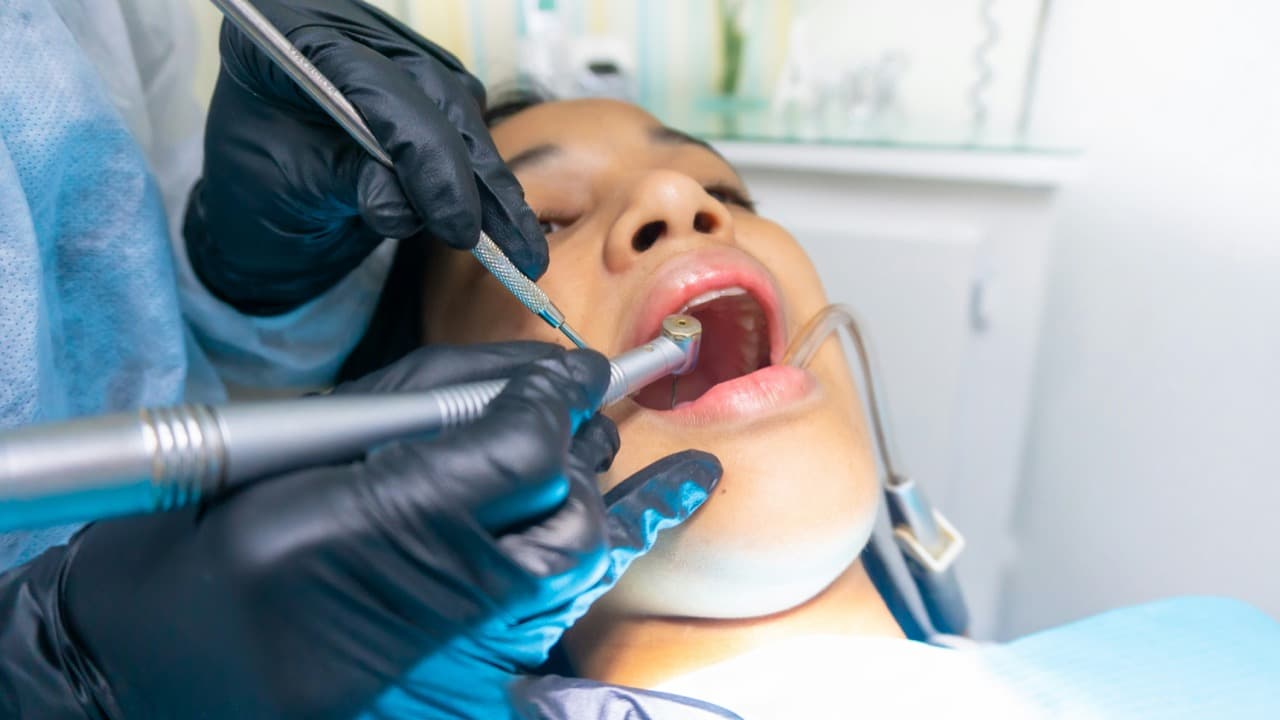
During scaling and root planing, your dental hygienist uses specialized instruments to remove tartar (hardened plaque) and bacterial deposits from below the gum line. This is effective at removing the bulk of the infection, but bacteria can hide in microscopic crevices along the root surface and in the tissue lining the pocket. These remaining bacteria can recolonize the pocket and cause the infection to return.
Arestin addresses this gap. After scaling is complete, your dentist places the antibiotic powder into the cleaned pockets. Over the next three weeks, the microspheres release a steady concentration of minocycline that is far higher than what oral antibiotics could deliver to the same site. This sustained local release gives the antibiotic enough time to eliminate bacteria hiding in the tissue.
What the Research Says
Clinical studies consistently show that combining Arestin with scaling and root planing produces better outcomes than scaling alone:
- Greater pocket depth reduction. A pivotal multicenter study found that scaling plus Arestin reduced pocket depths by an average of 1.32 mm at nine months, compared to 1.08 mm for scaling alone. That extra 0.24 mm matters because deeper pockets are harder to clean and more likely to harbor disease-causing bacteria.
- More sites reaching healthy depths. Patients who received Arestin were significantly more likely to see their pockets shrink to 5 mm or less, which is considered the threshold where patients can maintain the area with normal home care.
- Reduced bleeding on probing. Bleeding when your dentist measures pocket depths is a sign of active infection. Studies show Arestin-treated sites have less bleeding at follow-up visits, indicating better infection control.
These benefits are most pronounced in moderate to deep pockets (5 mm and deeper). For shallower pockets, scaling alone is usually sufficient.
What to Expect During the Procedure
The Arestin application itself is quick and straightforward. Here is what the process looks like:
- Deep cleaning first. Your hygienist performs scaling and root planing on the affected areas. This is the primary treatment. Depending on how many areas need treatment, this may be done in one visit or split across two appointments.
- Pocket identification. Your dentist identifies which pockets would benefit most from Arestin. Typically, these are pockets measuring 5 mm or deeper that showed signs of active infection.
- Arestin placement. Using a small cartridge with a thin tip, your dentist dispenses the antibiotic powder directly into each identified pocket. You may feel slight pressure, but the procedure is not painful, especially since the area is already numb from the scaling.
- Done. The microspheres begin working immediately. There is nothing to remove later because the particles dissolve on their own over the next three weeks.
The Arestin placement adds only a few minutes to your deep cleaning appointment.
Aftercare Instructions
Following the right aftercare routine ensures the antibiotic stays in place and works effectively:
- Do not floss treated areas for 10 days. Flossing too soon can dislodge the microspheres before they have fully released the medication.
- Avoid touching the treated gums with your fingers or tongue for the first week.
- Skip hard, crunchy, and sticky foods for 24 hours. Chips, nuts, caramel, and similar foods can physically push the medication out of the pockets.
- Brush gently. You can brush your teeth normally, but use light pressure around the treated gum areas for the first few days.
- No interdental brushes or water flossers on treated sites for 10 days. These can flush out the microspheres.
- Take any prescribed pain medication as directed. Most patients experience only mild soreness from the deep cleaning itself, not from the Arestin.
Side Effects and Risks
Because Arestin is applied locally rather than taken orally, systemic side effects are rare. The most common reactions are:
- Mild gum soreness at the treated sites (usually from the deep cleaning, not the Arestin itself)
- Temporary sensitivity in the treated teeth
- Headache (reported in some clinical trials, though uncommon)
Serious side effects are very rare. However, you should not receive Arestin if you:
- Are allergic to tetracycline antibiotics (minocycline, doxycycline, tetracycline)
- Are pregnant or breastfeeding
- Are under 12 years old (tetracyclines can stain developing teeth)
Because Arestin delivers medication directly to the pocket rather than through your bloodstream, it avoids many of the gastrointestinal side effects (nausea, diarrhea) that come with oral antibiotics. The local concentration is also much higher than what oral antibiotics achieve at the site, making it more effective against pocket bacteria with less overall drug exposure.
Arestin vs. Perio Restore
Both Arestin and Perio Restore are used alongside scaling and root planing to improve periodontal outcomes, but they work in fundamentally different ways:
- Arestin is a one-time antibiotic application done at the dental office. It uses minocycline to directly kill bacteria in the pocket over 21 days. It is a targeted, short-term intervention.
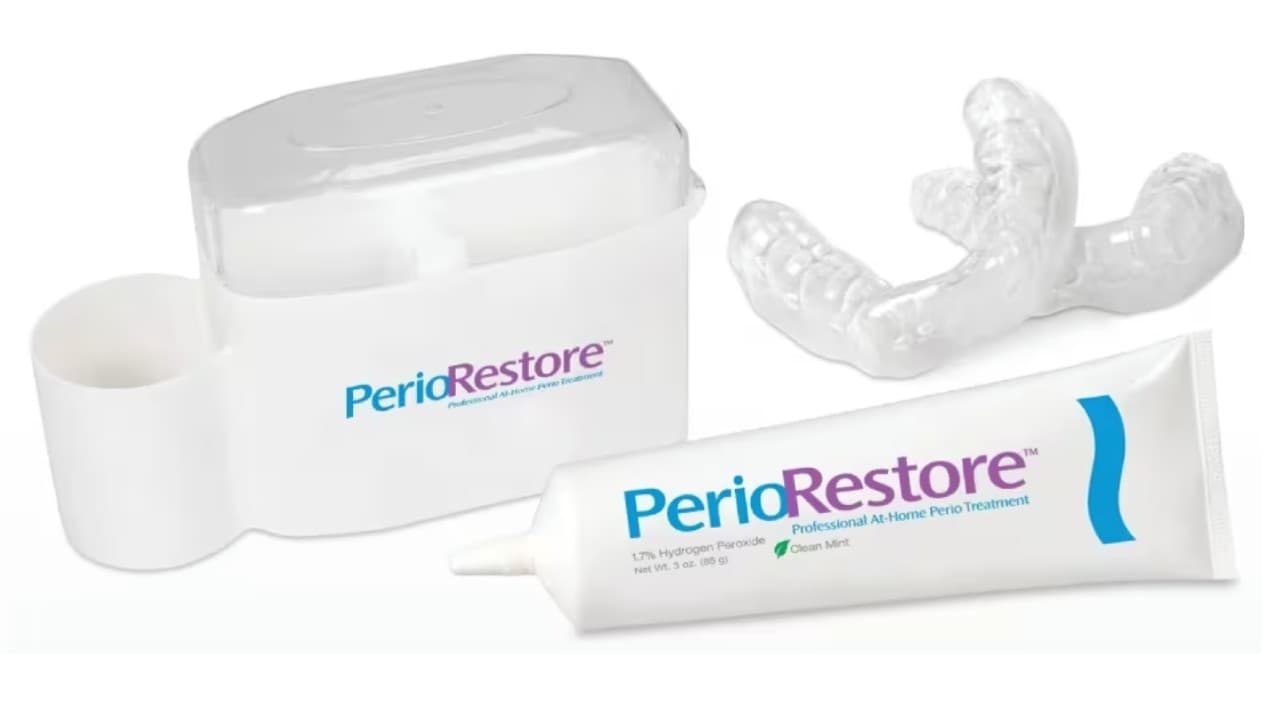
- Perio Restore is a 1.7% hydrogen peroxide gel that patients use daily at home in custom-fitted trays. Rather than using antibiotics, it delivers oxygen into the gum pockets. The bacteria that cause gum disease are anaerobic, meaning they thrive in low-oxygen environments. The peroxide creates an oxygen-rich environment that is hostile to these bacteria.
Here is how they compare on key factors:
- Application. Arestin is placed once by your dentist. Perio Restore requires daily use at home (typically 10 to 15 minutes per session).
- Duration. Arestin works for about 21 days. Perio Restore is designed for ongoing daily maintenance.
- Mechanism. Arestin kills bacteria with antibiotics. Perio Restore changes the pocket environment to suppress bacterial growth.
- Antibiotic resistance. Because Arestin uses an antibiotic, repeated use raises concerns about bacterial resistance. Perio Restore does not involve antibiotics, so resistance is not a factor.
- Maintenance. Arestin is typically reapplied at subsequent deep cleaning appointments if pockets remain deep. Perio Restore provides continuous daily maintenance between dental visits.
Some dentists use both approaches together: Arestin for an immediate bacterial knockdown after scaling, followed by daily Perio Restore for ongoing maintenance. This combination addresses both the acute infection and long-term pocket management.
Cost and Insurance Coverage
Arestin typically costs $35 to $75 per tooth site. If you have multiple pockets being treated, the total cost depends on how many sites need the antibiotic. A patient with four to six affected sites might pay $140 to $450 for the Arestin portion of their treatment, on top of the deep cleaning cost.
Most dental insurance plans that include periodontal benefits will cover Arestin, though coverage percentages vary. Common coverage is 50% to 80% after your deductible. Your dental office can submit a pre-authorization to your insurance company before treatment so you know your out-of-pocket cost in advance.
If you do not have dental insurance or your plan does not cover Arestin, ask about financing options. Many dental offices, including ours, offer payment plans through providers like CareCredit, Cherry, and Sunbit that let you spread the cost over several months.
Who Is a Good Candidate for Arestin?
Arestin is most beneficial for patients with:
- Moderate to severe periodontal disease with pocket depths of 5 mm or more
- Active infection signs such as bleeding on probing, pus, or persistent inflammation after previous cleanings
- Pockets that have not responded well to scaling and root planing alone at prior visits
- Localized areas of deep pocketing where targeted treatment makes more sense than systemic antibiotics
For mild gum disease (gingivitis), Arestin is usually not necessary. Early-stage gum disease can often be reversed with improved brushing, flossing, and a professional cleaning. Arestin is reserved for cases where the disease has progressed to periodontitis with measurable bone and attachment loss.
What to Expect After Treatment
Recovery from Arestin treatment follows the same timeline as recovery from scaling and root planing, since the Arestin itself causes minimal additional discomfort:
- First 24 to 48 hours. Mild soreness and sensitivity are normal. Over-the-counter pain relievers like ibuprofen work well. Stick to soft foods during this time.
- First two weeks. Gum tenderness gradually subsides. You may notice reduced bleeding when brushing. Continue to avoid flossing treated areas for the full 10 days.
- Four to six weeks. Your dentist will schedule a follow-up to measure pocket depths and check healing progress. Most patients see noticeable improvement at this point.
- Three months. Full healing and maximum pocket depth reduction. Your dentist will compare measurements to your baseline to determine whether additional treatment is needed.
The Bottom Line
Arestin is a well-studied, effective complement to scaling and root planing for patients with moderate to severe gum disease. By delivering a concentrated antibiotic directly into infected pockets, it targets bacteria that mechanical cleaning cannot reach. The procedure is quick, painless, and adds only a few minutes to your deep cleaning appointment.
That said, Arestin is not a cure-all. It works best as part of a comprehensive periodontal treatment plan that includes professional cleanings, good home care, and in some cases, ongoing maintenance with products like Perio Restore. The most important step is getting your gum disease properly evaluated so your dentist can recommend the right combination of treatments.
At MySmile Dental Care in Anaheim Hills, Dr. Bhatia provides comprehensive periodontal evaluations and can determine whether Arestin, Perio Restore, or both are right for your situation. If you are experiencing symptoms like bleeding gums, persistent bad breath, or loose teeth, schedule an appointment to get a clear picture of your gum health and a personalized treatment plan.
Frequently Asked Questions
How long does Arestin stay in the gum pocket?
Arestin releases minocycline gradually over approximately 21 days. The microspheres dissolve on their own, so there is nothing to remove. The antibiotic remains active in the pocket throughout this period, continuously reducing bacterial levels.
Does Arestin hurt when it is placed?
No. Arestin is applied as a fine powder directly into the gum pocket using a small cartridge tip. Most patients do not feel anything beyond mild pressure. The area is usually already numb from the scaling and root planing procedure that precedes it.
How much does Arestin cost per tooth?
Arestin typically costs $35 to $75 per tooth site. Most dental insurance plans that cover periodontal treatment will cover Arestin, though the percentage varies. Your dentist can pre-authorize coverage with your insurance company before the procedure.
Can Arestin cure gum disease on its own?
No. Arestin is always used as a supplement to scaling and root planing, not as a standalone treatment. The mechanical removal of tartar and bacteria during deep cleaning does the heavy lifting. Arestin helps by targeting bacteria that remain in the pockets after the cleaning is complete.
What should I avoid after Arestin treatment?
Avoid touching the treated areas for the first week. Do not floss the treated sites for 10 days. Avoid hard, crunchy, or sticky foods for 24 hours. Do not use interproximal cleaning devices like interdental brushes near treated areas for 10 days. You can brush your teeth normally, but be gentle around the treated gum areas.
Is Arestin safe for everyone?
Arestin is not recommended for people with a tetracycline allergy, since minocycline belongs to the tetracycline class of antibiotics. It should also be used with caution during pregnancy and breastfeeding. Children under 12 should not receive Arestin, as tetracyclines can affect developing teeth.
How does Arestin compare to Perio Restore?
Arestin is a prescription antibiotic applied once during a dental visit, while Perio Restore is a 1.7% hydrogen peroxide gel used daily at home in custom trays. Arestin targets bacteria with antibiotics over 21 days. Perio Restore uses oxygen therapy to create an environment hostile to anaerobic bacteria on an ongoing basis. Some dentists use both approaches together for comprehensive periodontal care.
How soon will I see results after Arestin?
Most patients notice reduced bleeding, less swelling, and improved gum pocket depths at their follow-up appointment, typically four to six weeks after treatment. Full results, including pocket depth reduction, may take up to three months as the gums heal and reattach to the tooth roots.
Disclaimer
This article is for informational purposes only and does not constitute dental or medical advice. It is not a substitute for professional dental care, diagnosis, or treatment. Always consult your dentist or other qualified health care provider with any questions you may have about a dental condition or treatment. Reading this content does not establish a patient-provider relationship with MySmile Dental Care.
Concerned About Gum Disease?
If you have been told you need deep cleaning or are experiencing bleeding gums, loose teeth, or persistent bad breath, schedule a periodontal evaluation at MySmile Dental Care. Dr. Bhatia can assess your gum health and recommend the right combination of treatments for your situation.