
 Emily Carter
At a Glance
- Gum recession is the gradual loss of gum tissue that exposes the root of the tooth. It cannot grow back on its own.
- The most common causes are brushing too hard with a stiff brush, periodontal disease, teeth grinding, and genetics.
- Recession can be stopped at any stage by treating the underlying cause. Catching it early prevents the need for surgery later.
- Treatment ranges from a soft-bristled brush and desensitizing toothpaste to scaling, gum grafts, and the minimally invasive pinhole technique.
- Sensitivity to cold, teeth that look longer, and a visible notch at the gum line are the most reliable early warning signs.
Receding gums are one of those changes that happens so slowly you may not notice it until a tooth starts to look long or feels sharply sensitive to cold water. By the time you see it in the mirror, you have usually been losing tissue for years.
The good news is that gum recession is almost always preventable, and even when it is already present, you can stop it from getting worse. Here is what causes recession, how dentists treat it, and what you can do at home to protect the gum tissue you still have.
What Is Gum Recession?
Gum recession is the gradual loss of the soft tissue that surrounds and supports your teeth. As the gum line moves down (or up, on lower teeth), more of the tooth root becomes exposed. Unlike the crown of your tooth, the root is not protected by hard enamel, which is why recession often causes sensitivity and a higher risk of root cavities.
Recession is common. The American Dental Association estimates that about 88 percent of people over the age of 65 have at least one site with recession, and roughly half of adults between 18 and 64 have some too. It is not something only older adults experience, and aggressive brushing is one reason younger patients see it.
Signs Your Gums Are Receding
Recession often starts on one or two teeth and spreads. Watch for:
- Teeth that look longer than they used to. Compare recent photos to older ones if you are not sure.
- A visible notch at the gum line. Where the enamel meets the root, there can be a small step you can feel with your fingernail.
- Sensitivity to cold, sweet, or sour foods. The exposed root has tiny tubules that connect directly to the nerve.
- A darker color near the gum line. Root surfaces are yellower than the enamel above.
- Bleeding when brushing or flossing. This usually signals inflammation, which often goes hand in hand with recession.
- Loose teeth or shifting bite. A later sign that the supporting bone has also been affected.
What Causes Receding Gums?
Recession almost never has a single cause. It is usually a combination of how you brush, what is happening below the gum line, and factors you cannot control like genetics.
Brushing Too Hard
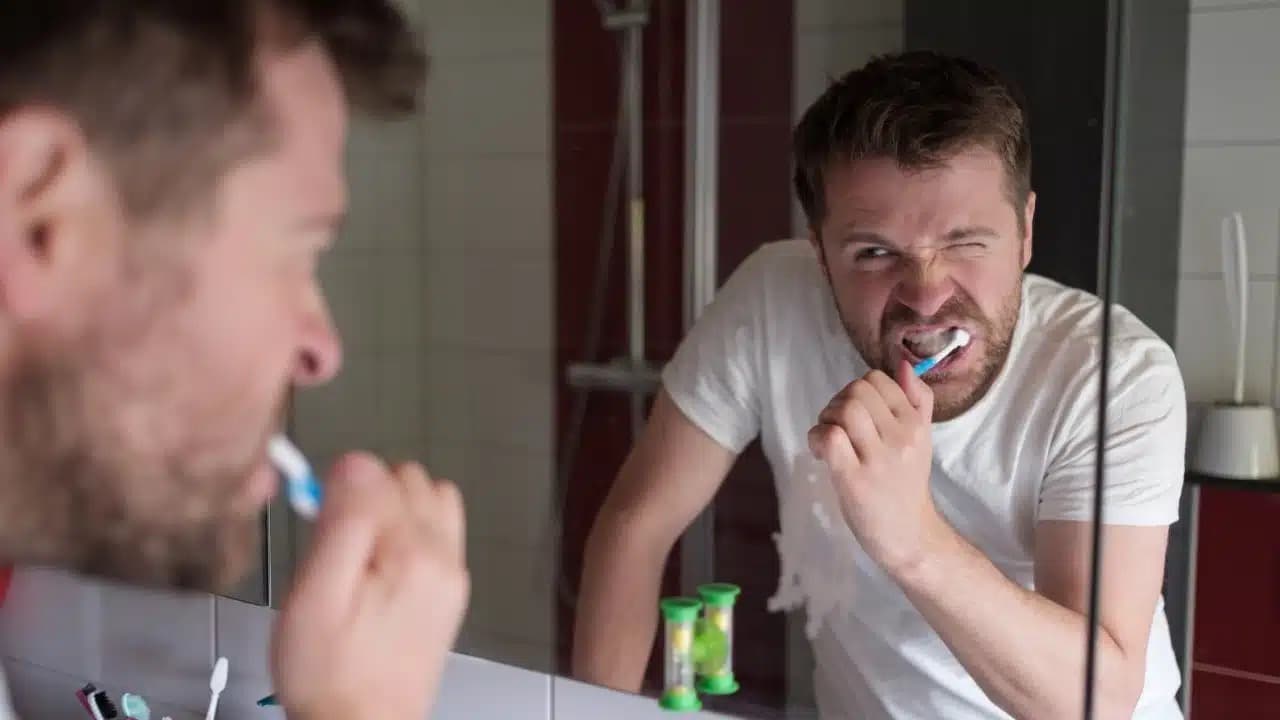
This is the most common cause in patients without active gum disease. A medium or hard-bristled toothbrush combined with heavy pressure scrapes the gum tissue away over years. People who grip the brush like a hammer, scrub side to side, or brush more than three times a day are especially at risk. The damage is usually worst on the canines and premolars, where the brush hits hardest.
Periodontal Disease
Bacteria that build up below the gum line trigger inflammation. Over time, that inflammation destroys the fibers and bone that anchor your gums to your teeth. As the supporting structures break down, the gums recede with them. Recession from gum disease often shows up alongside bleeding gums, persistent bad breath, and pockets that a dentist can measure during an exam. If you suspect this is the case, our guide to periodontal disease stages and treatment breaks down what to expect.
Teeth Grinding and Clenching
The constant pressure from grinding or clenching forces teeth to flex slightly at the gum line, which can fracture the enamel and pull the gum tissue back. Patients who grind often show recession on the outside surfaces of multiple teeth, sometimes with small wedge-shaped notches at the base. Treating the grinding habit, usually with a custom night guard, is essential to stop the recession. Our article on how to stop grinding your teeth at night covers the warning signs and solutions.
Genetics and Thin Tissue
About 30 percent of people have a genetic predisposition to gum disease, and many more have naturally thin gum tissue (called a thin biotype). Thin tissue is more vulnerable to recession from any cause, including normal brushing. If a parent or sibling has had gum recession or grafts, your risk is higher and earlier prevention matters more.
Orthodontic Movement
Moving teeth through thin gum or bone, especially in adults, can push the root closer to the surface and cause the overlying gum to recede. This is one reason a periodontal evaluation before starting Invisalign or traditional braces is so useful: it identifies areas where the tissue is thin and lets the treatment plan account for them.
Other Contributing Factors
- Smoking and vaping. Tobacco and nicotine reduce blood flow to the gums, making them more vulnerable and slower to heal.
- Lip and tongue piercings. The metal jewelry rubs against the gum line, especially on the lower front teeth.
- Misaligned teeth. Teeth that sit outside the normal arch get less bone and gum support to begin with.
- Hormonal changes. Pregnancy, puberty, and menopause can make gum tissue more sensitive and reactive.
- Poorly fitting partial dentures. Pressure on the gums from a clasp or flange wears the tissue away over time.
Can Gums Grow Back?
No. Unlike skin or bone, gum tissue does not regenerate naturally once it has receded. The gum line will not return to its original position on its own, no matter how many oil pulls, herbal rinses, or supplements you try. Anyone promising that gums can be regrown without surgery is selling something.
That does not mean nothing can be done. Recession can be:
- Stopped. Identifying and removing the cause (a stiff brush, untreated gum disease, grinding) halts further progression.
- Hidden. Bonding can cover an exposed root surface and make the gum line look more even, even though the gum itself has not grown back.
- Surgically rebuilt. Gum grafts and the pinhole surgical technique physically restore tissue to the receded areas.
Treatment Options for Receding Gums
Treatment depends on how much recession is present and what is causing it. A dentist or periodontist will usually start with the least invasive option and step up only if needed.
1. Adjusting Your Brushing
For mild recession caused by brushing too hard, switching to a soft-bristled or electric brush with a pressure sensor is the single most effective intervention. The goal is to clean the teeth and gum line without scrubbing away tissue. Hold the brush like a pencil, not a fist, and let the bristles do the work.
2. Desensitizing Treatments
Exposed roots are sensitive because the dentin underneath is full of microscopic tubules that lead directly to the nerve. Desensitizing toothpaste with potassium nitrate or stannous fluoride blocks those tubules over a few weeks. In-office fluoride varnish or bonded desensitizers give faster, longer-lasting relief.
3. Scaling and Root Planing
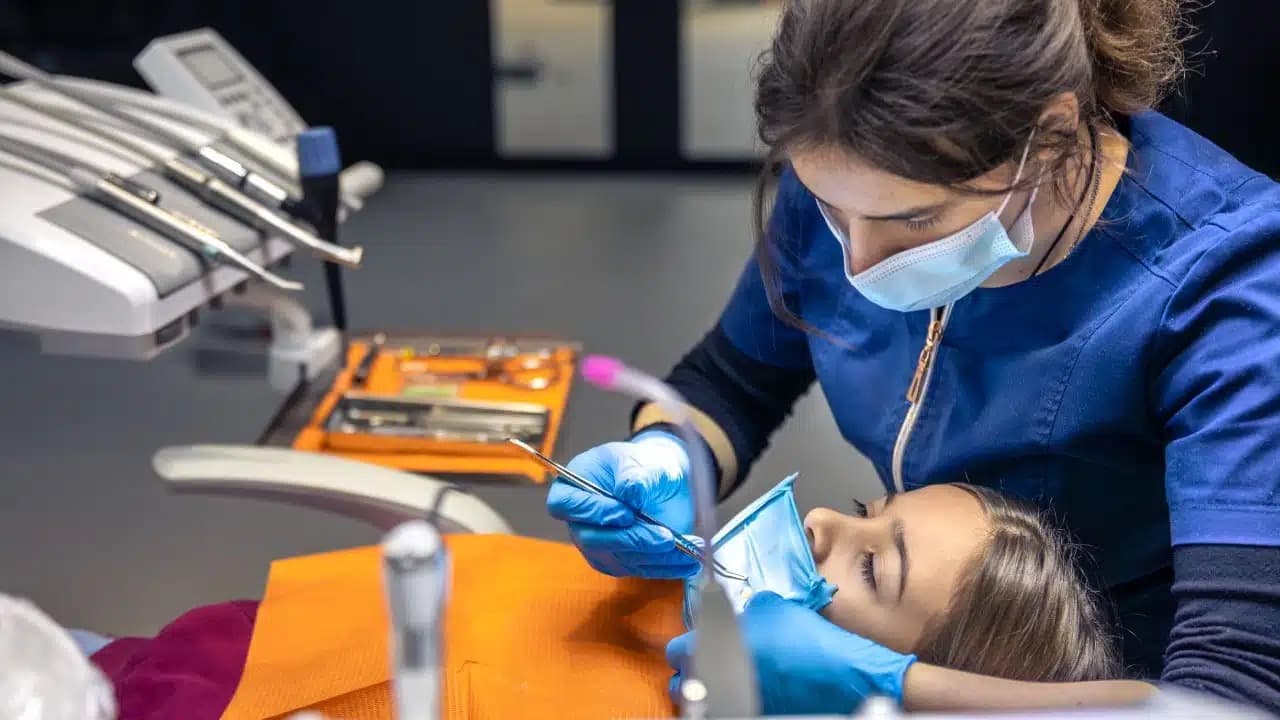
When recession is driven by gum disease, the bacteria below the gum line have to come out before anything else can heal. A deep cleaning, called scaling and root planing, removes hardened plaque and bacteria from the root surfaces and lets the gum tissue reattach where it can. Our guide to what deep cleaning actually feels like explains the process step by step.
4. Composite Bonding
For small to moderate recession, tooth-colored composite resin can be bonded to the exposed root to cover the sensitive surface and improve appearance. It does not replace gum tissue, but it protects the root from further wear and decay. Bonding is fast, painless, and reversible if you ever want to switch to a surgical option later.
5. Gum Grafts
A gum graft is the traditional surgical fix for moderate to severe recession. A periodontist takes a small piece of tissue, usually from the roof of the mouth or from a tissue bank, and stitches it over the receded area. After about three months, the graft heals into a permanent thickened band of gum tissue that protects the root and looks natural. Healing is uncomfortable for the first week but the long-term results are predictable and lasting.
6. Pinhole Surgical Technique
The pinhole technique is a newer, minimally invasive alternative to grafting. The dentist makes a tiny entry point in the gum, uses small instruments to loosen the tissue, and slides it down to cover the exposed root. There are no stitches, no donor tissue from the palate, and multiple teeth can be treated in a single visit. It works best for mild to moderate recession with adequate remaining tissue.
How to Prevent Recession (Or Stop It Getting Worse)
- Use a soft-bristled brush. Medium and hard brushes have no business in a healthy mouth. An electric brush with a pressure sensor takes the guesswork out of it.
- Brush gently. Two minutes, light pressure, small circular or angled strokes. If your bristles splay out after a few weeks, you are pressing too hard.
- Floss daily. Recession from gum disease starts between the teeth, where your brush cannot reach.
- Treat grinding. A custom night guard is far more effective than over-the-counter mouthguards and prevents the recession that comes with bruxism.
- Get cleanings every six months. Professional cleanings remove the tartar that drives gum disease before it can erode supporting tissue.
- Stop smoking and vaping. Tobacco use accelerates recession and slows healing after any treatment.
- Address misalignment. Crooked teeth are harder to clean and often sit in thin areas of gum and bone. Straightening them with Invisalign or braces can take pressure off vulnerable tissue.
When to See a Dentist
Book an appointment if you notice persistent sensitivity to cold, teeth that look longer than they used to, bleeding when brushing, or a visible step at the gum line. Recession that has already started will not stop without addressing the cause, and the longer you wait, the more options come off the table.
At MySmile Dental Care in Anaheim Hills, Dr. Bhatia will measure your gum levels at every tooth, look for the underlying cause, and recommend the least invasive treatment that will actually work for your situation. If you already have signs of gum disease, we also offer Perio Restore and Arestin as part of a comprehensive periodontal treatment plan.
Frequently Asked Questions
Can receding gums grow back on their own?
No. Gum tissue does not regenerate once it has receded, so the gum line will not return to where it used to be without treatment. The good news is that recession can be stopped from getting worse, and surgical procedures like gum grafts or the pinhole technique can rebuild the lost tissue. Catching recession early gives you more options and better results.
How do I know if my gums are receding?
The most common signs are teeth that look longer than they used to, a visible step or notch where the enamel meets the root, sensitivity to cold or sweet foods, and seeing the darker root surface near the gum line. Many people first notice it when comparing recent photos to older ones, or when a dentist points it out during a routine exam.
Is gum recession a sign of gum disease?
Sometimes, but not always. Periodontal disease is one of the leading causes of recession, especially when bleeding gums, persistent bad breath, or loose teeth are present. However, recession can also be caused by aggressive brushing, teeth grinding, genetics, lip or tongue piercings, and orthodontic movement, with no underlying infection.
How much does a gum graft cost?
A gum graft typically costs $600 to $1,200 per tooth without insurance, depending on the type of graft and the complexity of the case. Dental insurance often covers part of the cost when the procedure is medically necessary to protect a tooth root or stop further recession. Less invasive options like the pinhole technique may cost more per tooth but treat multiple teeth in a single visit.
Will receding gums get worse if I do nothing?
Usually, yes. Untreated recession tends to progress, especially when the underlying cause (brushing technique, grinding, gum disease) is not addressed. Once enough gum tissue is lost, the supporting bone underneath can also recede, which eventually loosens the tooth. Stopping the cause is the most important step, even before you consider surgical repair.
Does brushing harder clean better?
No, and it is one of the most common causes of recession. Plaque is soft and comes off with light, repeated motion. Pressing hard with a stiff brush does not remove more plaque, but it does scrub gum tissue away over time. A soft-bristled brush, gentle pressure, and a technique that angles the bristles toward the gum line is far more effective and safer.
Can Invisalign or braces cause gum recession?
Orthodontic treatment can contribute to recession in some patients, particularly when teeth are moved through thin gum tissue or beyond the natural arch of the jawbone. This is more common in adults whose gum and bone support has already started to thin. A thorough periodontal evaluation before starting orthodontics helps identify who is at higher risk.
What toothpaste is best for receding gums?
A fluoride toothpaste with a low abrasivity score is the safest choice. If you have sensitivity at the exposed root surface, a desensitizing toothpaste containing potassium nitrate or stannous fluoride helps block pain signals over a few weeks of consistent use. Avoid whitening toothpastes with high abrasivity, since the exposed root is softer than enamel and wears down faster.
Disclaimer
This article is for informational purposes only and does not constitute dental or medical advice. It is not a substitute for professional dental care, diagnosis, or treatment. Always consult your dentist or other qualified health care provider with any questions you may have about a dental condition or treatment. Reading this content does not establish a patient-provider relationship with MySmile Dental Care.
Worried About Your Gum Line?
Receding gums never get better on their own, but they can almost always be stopped from getting worse. Dr. Bhatia at MySmile Dental Care can pinpoint exactly what is driving the recession in your mouth and build a plan to protect your teeth long term.